
House of Sayuri is screening as part of the 2024 Fantasia International Film Festival, which runs from July 18 to August 4.
Koji Shiraishi, known for the unsettling Noroi: The Curse, gives us in House of Sayuri an initially by-the-numbers haunted house film that pleasantly surprises with a second act rug pull. The film focuses on a family moving into a new home, where strange things immediately start occurring. It becomes evident that a violent ghost is haunting the family, bringing death and darkness to anyone who stays the night in the house.
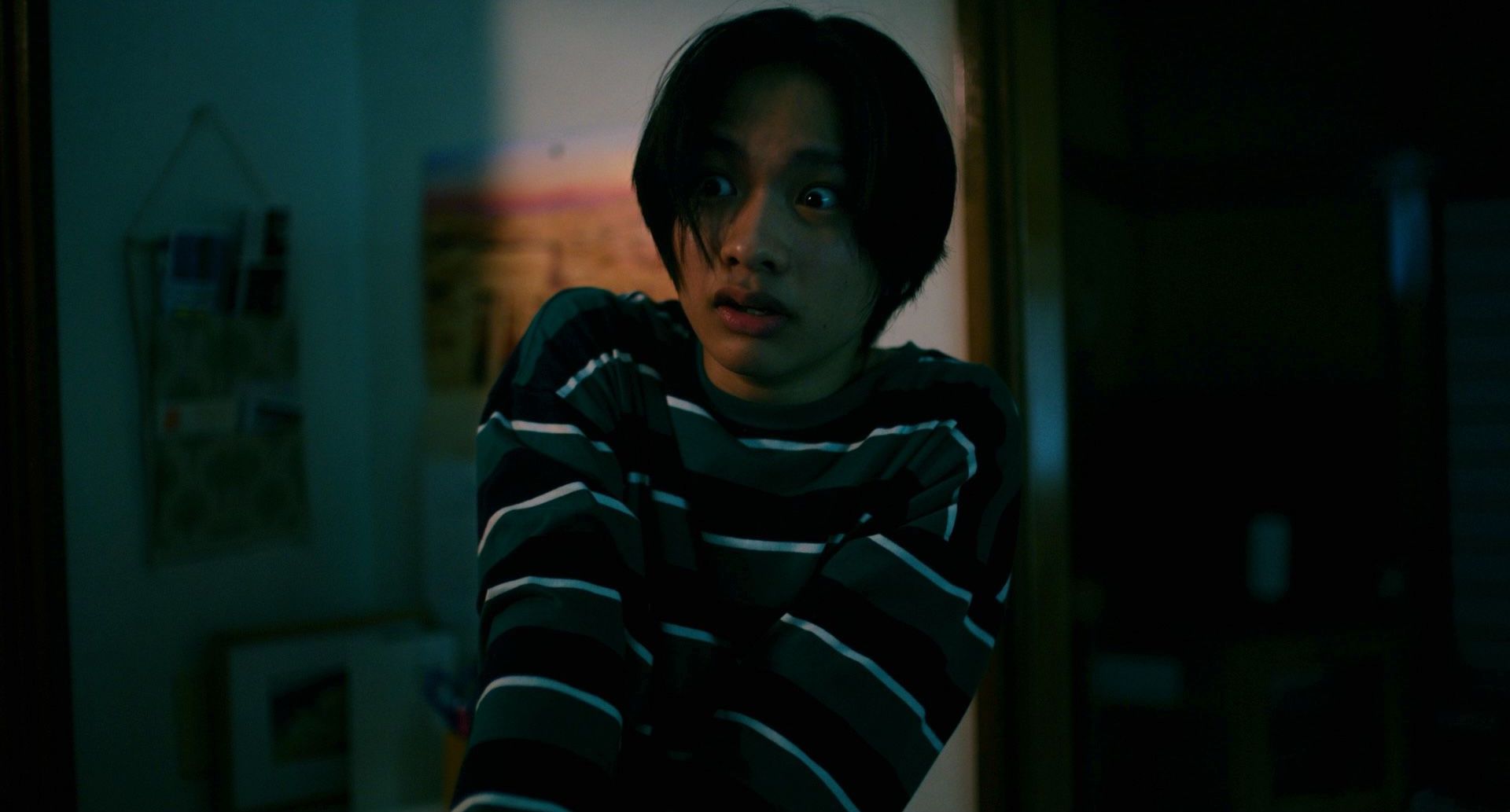
House of Sayuri spends a good portion of its runtime recycling the same scare formula. A person wanders through the narrow corridors of the new home at night, finds themselves in a room alone, and a figure appears behind them. The first instance of this is the most jarring, in that it culminates in an abrupt bit of violence that propels the narrative. After this, though, the set pieces grow monotonous.
The film itself has something of a metronome rhythm that I feel doesn’t play to its benefit. The family is in the house; the family eats dinner; the family is haunted at night; the next day, Norio, the family’s teen son, interacts with his friend at school (who conveniently has an extrasensory sensitivity, which certainly helps when you have a ghost in the house).
At least, this is how things go for the first 40 minutes. In this section, to its credit, the sound design is great. I enjoy the ghostly laughing, and the laugh loop coming from the broken television broadcast, and the whispering of “brother” in the set piece that finally cracks the shell of this modern Japanese ghost story. If the first 40 minutes is utterly conventional, almost to the point of boredom, this central set piece is such a sudden break from convention that it feels like someone shut the film off and started a different one.
In place of the done-before movie is a clever twist on the haunted house framework. The entire conceit of the haunted house is that the restless spirit disrupts the lives of those who choose to live inside its dwelling. Here, Shiraishi questions what might happen if one chose not to let the ghost disturb them. It is a fun turn the film takes.
When Shiraishi decides to take another turn in the film’s final act, it doesn’t land as sweetly nor as cleanly. Following up a light middle act with a much more grim third one makes for an imbalance in tone that is irreconcilable. Not to mention that the impulse to move away from the conventions of the ghost story is undercut by the reveal of the ghost’s origins, which fall into clichés regarding trauma. Perhaps this is inevitable in a genre that requires an entity to seek retribution from the afterlife. Either way, the extended flashback sequence does not square with what has come before.
There’s a 30-minute-or-so stretch in here that is a good time, and you can’t rightly get to what makes that stretch good without the 40 minutes that came before. But the last section is ruinous when it comes to whatever goodwill was established before it. The imbalances make the watching experience of House of Sayuri a strange one, but the film certainly has its strong suits.
House of Sayuri: B-
As always, thanks for reading!
—Alex Brannan (Letterboxd, Facebook)
 CineFiles Movie Reviews