We’ve heard it all before. The isolated, industrious, possibly roguish single man left to his own devices in the depths of space. It’s a familiar tale. Author Andy Weir himself has already strung a similar yarn before this one, with the potato farming celestial castaway of The Martian (who would later be portrayed by Matt Damon in Ridley Scott’s 2015 adaptation). Project Hail Mary has a premise that shares a resemblance, but the end results are far different (and, I would argue, more compelling).
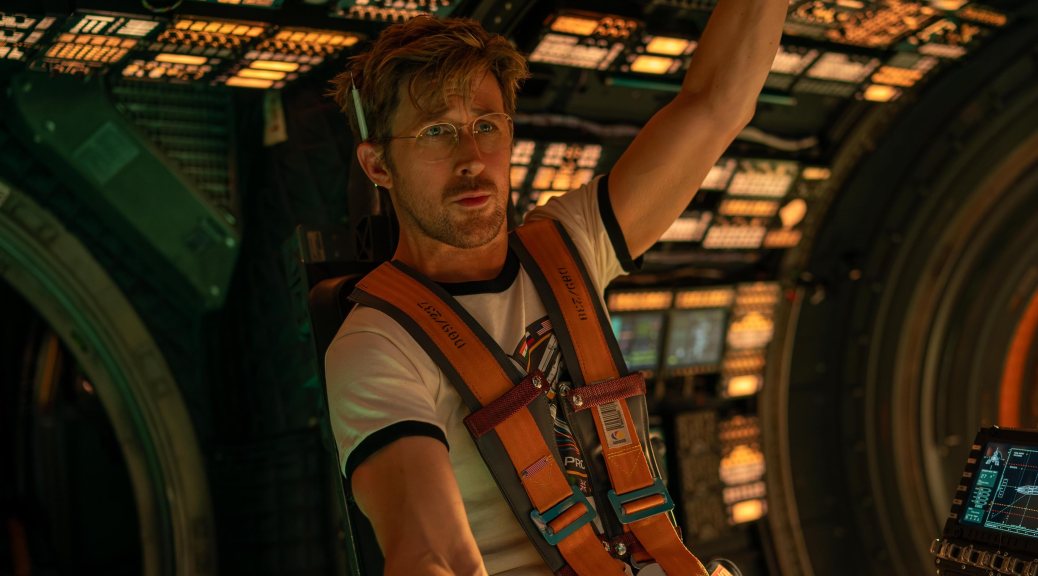
In this iteration, our stranded hero is Ryland Grace (Ryan Gosling), a loner middle school science teacher whose controversial PhD dissertation and academic antics got him blacklisted from the scientific community. Luckily for Grace, his theory that water is not necessary for life lands him a spot on the global team that is working desperately to stop a mysterious molecular life form, dubbed Astrophage, from dimming the solar system’s sun enough to cause Earth to freeze over. Unluckily for Grace, this results in him booking his ticket on a one-way trip into the expanse of space to find the solution that will save the planet—a voyage that he will certainly die on.
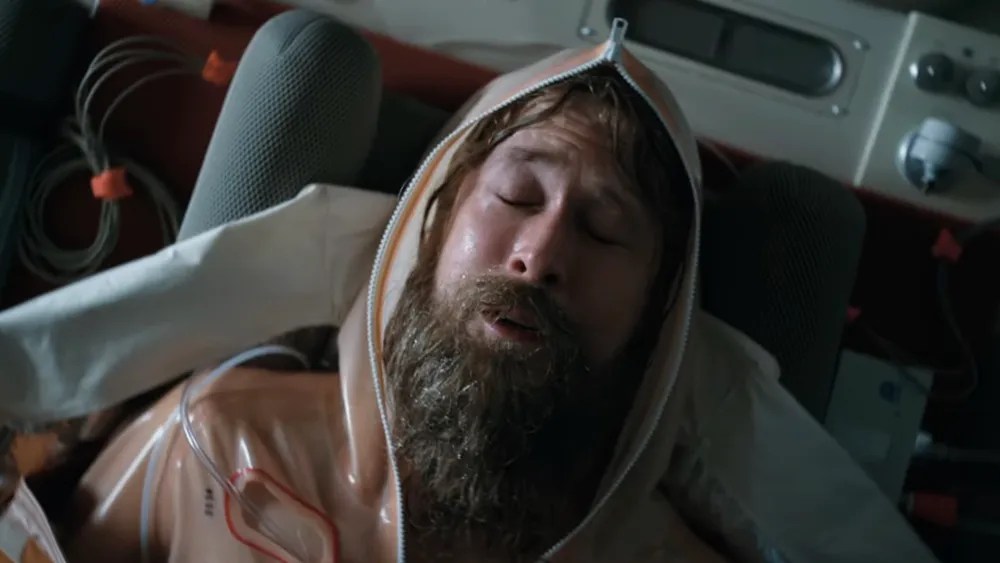
At the start of the film, Grace awakens from a medically induced coma to find the rest of the crew have died during the trip and his memory has gone. It takes him a few beats to even realize he is smart enough to be qualified for the mission he is on.
Drew Goddard’s adaptation of the book is littered with cornball humor, and this opening stretch works overtime to establish the humorous tone. Even as one of the first images we see is a cold corpse in space, the script lightly moves past this in favor of showcasing Gosling’s comedic charm. This largely works, too, even as the jokes themselves are repetitive and basic. Gosling’s ability to deliver these riffs with no one to work off of is fairly impressive. His ability to shift tone on a dime when the script requires it is even better.
For all of its levity in the face of certain doom, Project Hail Mary asks Gosling to also bear the weight of the world on his shoulders at a moment’s notice. The least convincing thing this script puts forth is the character’s jovial sensibility suddenly giving way to immense emotional sentiment. Those corpses we skip over in the first scene? They get a Viking space funeral in which Grace eulogizes these people he doesn’t even remember. It’s a scene that doesn’t feel tonally consistent, but Gosling sells it all just well enough to keep us moving along.
These early plays at sentimentality don’t work nearly as well as the one’s that appear later in the film, once Grace arrives at his destination and carries out an unlikely friendship with an entity who is there for a similar reason. This story suddenly becoming a buddy movie is its crowning achievement, as what initially reads as The Martian 2.0 grows into a film about finding resilience through camaraderie. Through this, the stronger emotional appeals that the script goes for become more successful.
That said, the film’s insistence on flashing back to the months, weeks, and days leading up to “Project Hail Mary’s” endzone heave and the movie’s cumbersome final act prevent it from elevating to rewatchable material. A wonderfully sedate Sandra Huller helps to prop up the flashbacks for most of the film, but by the time we reach the climactic moments of the present, the moves backward in time work to stall what would otherwise be nicely paced momentum. And as much as the storytelling in the final act makes sense at the level of character motivation, the way that directors Phil Lord and Christopher Miller dwell on these scenes, it feels as though the film has already ended three times by the time the credits finally drop.
P.S. Gosling’s glasses business throughout this movie is distracting and annoying.
Project Hail Mary: B
As always, thanks for reading!
—Alex Brannan (Letterboxd)
 CineFiles Movie Reviews