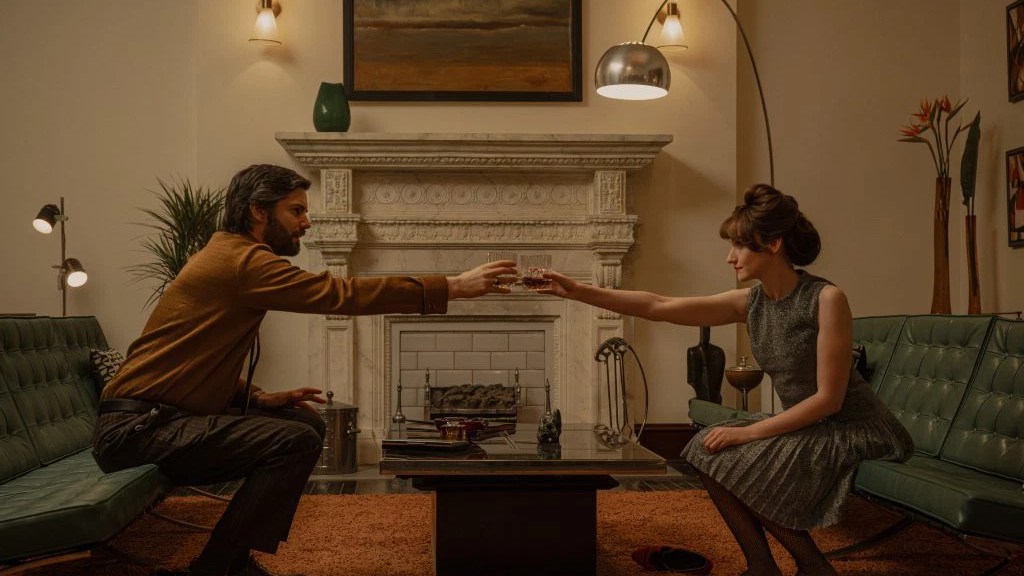
Apartment 7A is screening as part of the 2024 Fantastic Fest, which runs from September 19 to September 26.
I’d be lying if I said I’ve read Ira Levin’s 1967 novel Rosemary’s Baby. Although, it sits on my dining room table (because the one bookcase I own overflows). It is a burnt orange hardcover volume, slim, with similarly orange-y paper, as the book is from the original Random House printing. I found it on the side of the road when I was 16, in a box of other very old books ready to be tossed into the back of a garbage truck.
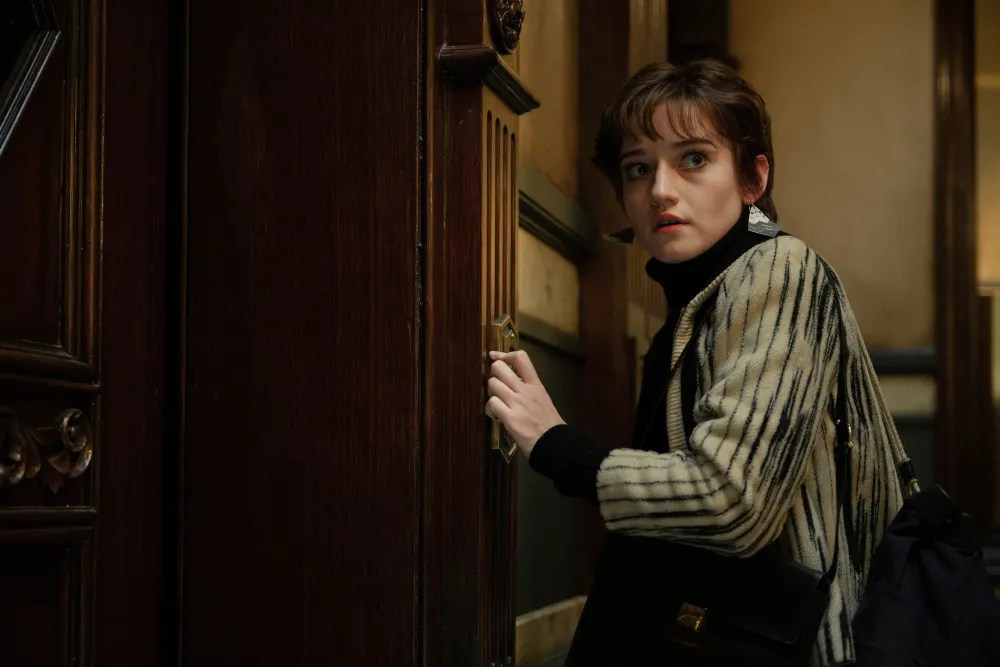
So I haven’t read it. But I thumbed through it after watching Natalie Erika James’ Apartment 7A, because it is short enough to find the pair of scenes in question. The scenes that connect the two works, because (spoiler to the few who will watch this film having not seen nor read Rosemary’s Baby), Terry Gionoffrio (Julia Garner, in James’ film) dies by an apparent suicide in the early pages of the novel:
They rode upstairs (‘Oh, my!’ the night elevator man Diego said: ‘Oh, my! Oh, my!’), looked ruefully at the now-haunted door of 7A, and walked through the branching hallway to their own apartment.
The novel sees Terry describing to Rosemary how she stumbled into living with the Castevets: “They picked me up off the sidewalk—and I mean that literally; I conked out on Eighth Avenue.” In Apartment 7A, the added dimensions come in the form of Terry’s injured ankle during her work on Broadway, a stumbling block in her career that also results in a prescription drug addiction (in Levin’s novel, it’s straight-up “H, the dope”). This combination is what lands her in the Bramford apartments.
The central preoccupation of Rosemary’s Baby is echoed in James’ film in the form of the exploitation of the female body within the creative industries – it’s very Showgirls or Black Swan, but also very much a reskinning of Rosemary itself with a minor variation. It is a prequel that begs for you to meet it on its own terms and ignore its central ties, while also drawing on any textual connection it possibly can. This is the wicked dance of the legacy intellectual property reskin: why take the risk when the risk was already taken the first go-around?
Apartment 7A is far from the most egregious victim of this calculation. But to even read 40 pages of a 1967 novel and notice the difference, to notice that it is responding with almost no fear to drastic shifts in American politics and that those politics are built into the very bones of the thing, that says something. The politics of Apartment 7A are not antiquated by any means, but they are no more subversive nor markedly different on the face of it than Levin’s original work. This might say more about American politics itself than it does about Hollywood remake culture, but one can’t help but watch the film and wish it was going for something more daring.
At almost every turn, 7A struggles to replicate the dread of its predecessor. Drawn-out scenes of Garner alone in the apartment building are meant to stoke unease but more often curdle into monotony. Save for the most visceral and gruesome sequence in the film, a macabre dance with the devil (literally), the whole film feels visually flat. (The second-most visceral and gruesome scene, it should be noted, is a half-baked redux of a much better and much more unsettling sequence in Luca Guadagnino’s Suspiria remake).
In the end, the lack of tension is the most glaring problem with Apartment 7A. That said, it should have come as no surprise to me that a film whose very premise foretells its ending (and that ending is a guarantee that there won’t be a titular baby in this one) would find itself struggling to establish, let alone maintain, tension. It’s a shame, as James showed real promise with Relic, and this feels like a major step backwards.
Apartment 7A: D+
As always, thanks for reading!
—Alex Brannan (Letterboxd, Facebook)
 CineFiles Movie Reviews