
This is a new series centering on films which have received “F” scores from CinemaScore. CinemaScore polls theater-goers during a film’s opening weekend, gauging the average consumer’s thoughts on new releases. An F CinemaScore is potentially a PR nightmare for a film, as it indicates that, on the main, the people most excited to see a film on its opening weekend hated it.
We’ve covered F CinemaScore films on this site before, including Andrew Dominik’s Killing Them Softly (which I think is fairly great) and the subject of this article, mother! With this series, we pair an ill-fated F CinemaScore movie with a second, thematically similar film and make a double feature out of it. Today’s double feature pairs Darren Aronofsky’s mother! with Alan Gadney’s New Age, surreal spiritual journey film Moonchild.
This is Part 1 of an ongoing series. However, future installments will be published on a new Substack newsletter called Bleeding Eye Cinema. Part 2 of the CinemaScore Double Feature series is already live at that site. On Bleeding Eye Cinema, we take a look at weird, WTF, underseen, cult, psychotronic, B- and Z-grade, and all other manner of headache-inducing movies. Come join us and let the CRT electron beams melt the jelly off your eyeballs!
Moonchild (Alan Gadney, 1972)

Moonchild begins with a quote from clairvoyant Edgar Cayce, an influential figure in what would come to be known as the New Age movement: “You may not even have to come back at all if you become perfectly developed in this life…”
One of Cayce’s trance-induced contributions to culture were his proclamations to the existence of fictional locations like Atlantis. Cayce may be the most fitting place to enter into the world of Moonchild, which tells the story of a young painter (Mark Travis) lured into a hotel where he may check in but may never leave. This liminal space produces a variety of semi-surreal interactions. The movement between interactions feels trance-like; he is told early on that Satan is producing illusions that trick his senses. The hotel itself is similarly unmoored from geographical space and beyond sensorial reason: an Atlantis, or the mapping of a mind’s subconscious.
Upon checking in, the young man is dubbed “Moonchild #7.” He is told by the maître d’ (Victor Buono) that the whole “moonchild” business is the nonsense of paganism. The insinuation is that the Devil has some sort of grip on this building, and thus on the Moon Child himself. The painter is also stricken with bouts of deja vu. Flashes of some indeterminate past that he does not remember living intrude into his waking thoughts, most notable among them being a romantic rendezvous with a beautiful woman whom he fruitlessly chases around the castle-like hotel.
Moonchild, when it is coherent, meditates on the struggles of faith and guilt, and perhaps specifically those struggles in the context of art creation. The film may be conflating the artist’s work with his conscience, invoking the “perfectly developed in this life” from Cayce in a dual manner. The conflict in Moonchild involves the battle over the painter’s soul; the dreamlike flashes of past lives are incomplete representations of this conflict, repeating endlessly. The two hotel employees acting as literal angel and demon on his shoulders implore him to “wake” to their respective beliefs. Meanwhile, a “Mr. Walker” (John Carradine) serves as the boy’s neutral guide.
This journey is often mediated by something, whether it be fragmented waking nightmares, superficial religious bromides, the artist’s paintings, or Walker’s documentation of events from a safe distance. At certain points, the competing guiding voices around the Moon Child interfere with his art, insisting that imperfections be fixed.
Unfortunately, what little Moonchild has to say about the fallibility of the human condition is caught up in lame attempts at surreal imagery and an insistent, hollowed-out argument for a spiritual duality. There is something intriguing to the sheer unlikability of both the pagan man and the godly one, but the even split that sees the protagonist’s conscience as a battleground of good and evil leaves little room for nuance.
For what it’s worth, Victor Buono’s ham-handed performance as the gluttonous man of faith is a treat.
mother! (Darren Aronofsky, 2017)

At the start, as in the end, Mother burns. It is, no matter how you slice it, an overt metaphor. Whether you can appreciate its boldness or balk at its obviousness, Darren Aronofsky’s mother! is swinging hard at some balls. At the time, I balked hard despite the film’s effective sequences of utter chaos. As with most of my previous reviews, the article was also marked with occasional incompetence (I don’t know if I’d characterize this set design as American colonial; I would no longer say that this “middles as a farce;” and I certainly wouldn’t call any of the imagery in this expressionist).
Rewatching it for the first time since 2017, I think the film has a lot more clarity than I gave it credit for 8 years ago (oh, to be a naïve early-20s millennial again!). While true that the film attempts multiple interpretive paths for its allegorical story, each one on its own is a fairly basic interpretation. View it through the lens of the patriarchal, the natural, the spiritual, or the humanist, and the result is more or less the same. The film replaces character with symbol, story with theme, text with subtext. When everything is meant to stand in for something else, narrative intrigue becomes sorely lacking. Substance is an issue here – in that, there is an airy lack of it. The longer it goes along, the more evident this lack becomes.
On the plus side, when you decide not to take the whole thing seriously, the humor of the piece comes into focus more clearly. The first act of the film, in particular, is darkly funny. Michelle Pfeiffer and Ed Harris are better as comic relief than they are as Adam and Eve stand-ins. The more cacophonous the film gets, the worse this comedy becomes, although it is still present.
Pretty quickly, the film starts falling apart at the seams. This is both intentional in how the script is structured, but also an issue with how it is paced. The Harris-Pfeiffer segment is the film’s shining light, and it progresses at a nice, leisurely pace. As soon as Cain and Abel (not named as such here, but duh) show up, the mechanism whines and groans, already burdened by empty allusions and unsatisfying metaphor. It tries to pick up the speed as more strangers wander into the house, but there remains over an hour of runtime. The film’s unwieldiness is both a feature and a bug, as the script struggles to engage with its metaphor and maintain urgency at the same time. Once the final act turns into a delirious set piece traipsing lazily through generations of human suffering, the whole exercise devolves into a stupid, cynical joke.
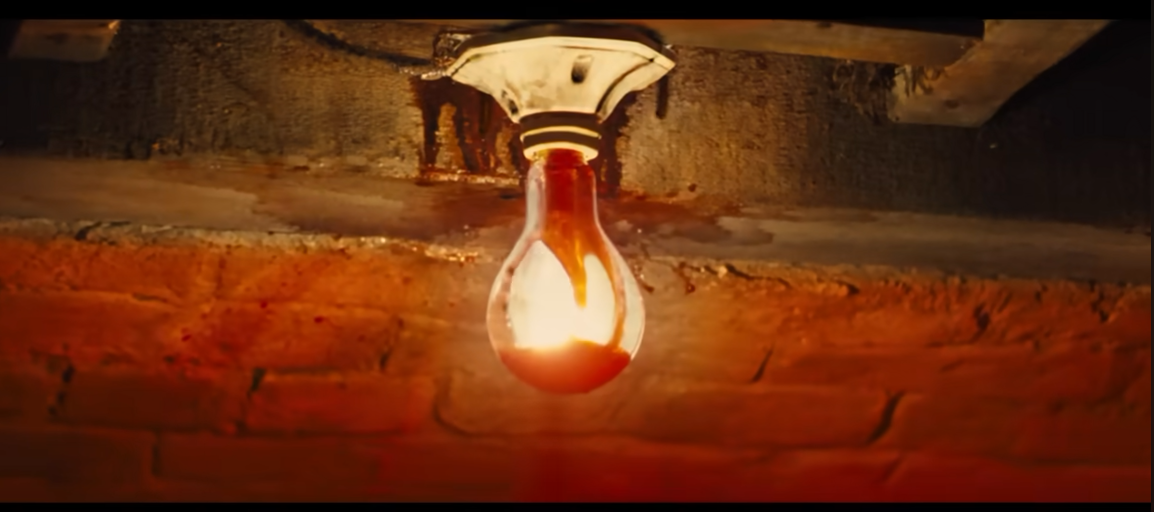
In the end, I find mother! exhausting, not because it beats me to the ground with a potent message, but because it beats me over the head with a lacking one. The film’s F CinemaScore is more a product of its marketing than of its content, but it does not help that the film alienates its spectator by design. You are meant to feel uneasy, not be excited by psychological art-horror where the walls drip blood and a threatening Domhnall Gleeson lingers behind Jennifer Lawrence.

The Crossover
Moonchild and mother! may only seem tenuously comparable, but I find the points of intersection to be quite interesting.
Both films uproot their characters by placing them inside thinly veiled allegories of religious doctrine and its hold on people. The Moon Child is set upon by odd and antagonist characters that cause him to question his sanity and challenge him to settle the matter of his faith. In the end, the painter is revealed to be a recurrent figure in the history of humankind’s fascination with religion and religious persecution. As his multiple histories flash before him, he goes to bed with the elusive woman that he has been searching for during most of the film.
I care little to read into the metaphor much more than this, but one could make the case for the woman’s role as either a temptress (the maître d’, in a strange and horny rambling monologue, outlines this role quite explicitly) or as a symbol for some spiritual truth. Perhaps it is both: we are tempted by the possibility of an absolute truth that simply does not exist. I speculate.
The characters in mother! demonstrate similar external and internal tensions as the Moon Child. Mother is accosted by the increasing and increasingly rambunctious people entering the home. As the film vaguely depicts the progression of the story of The Bible, Mother is trampled upon by humankind’s increasing idolatry. The clumsy metaphor – Mother Nature is constantly being violated by us – paints the human condition’s endless pursuit of truth as a causal element in the destruction of our planet.
In presenting these quasi-spiritual interpretations of the human condition, both films also centralize art. The painter and the poet both struggle to perfect their work. The Moon Child is pulled in different directions as he tries to capture his past lives on the page. Javier Bardem’s poet is rendered without inspiration until he witnesses the pains and sorrows of man and nature (and man unto nature). Of course, the God metaphor in mother! renders the poetry into the entire history of Christian text and its ensuing millennia of human suffering, a far more ambitious choice than Moonchild’s art.
Both films use art to present an overtly cynical interpretation of the history of religious persecution. Both present people killed or condemned to death under the name of God. And both, frankly, flatten a lot of the nuance out of the conversation. Moonchild is too loose in its presentation of the Inquisition, and mother! is too frantic in condensing thousands of years of religious conflict into a blurry slurry of a set piece. Personally, I think both filmmakers have eyes bigger than their stomachs when it comes to their artistic ambitions, as both films are cumbersome and eventually become tedious.
As always, thanks for reading!
—Alex Brannan (Letterboxd, Substack, Facebook)
 CineFiles Movie Reviews