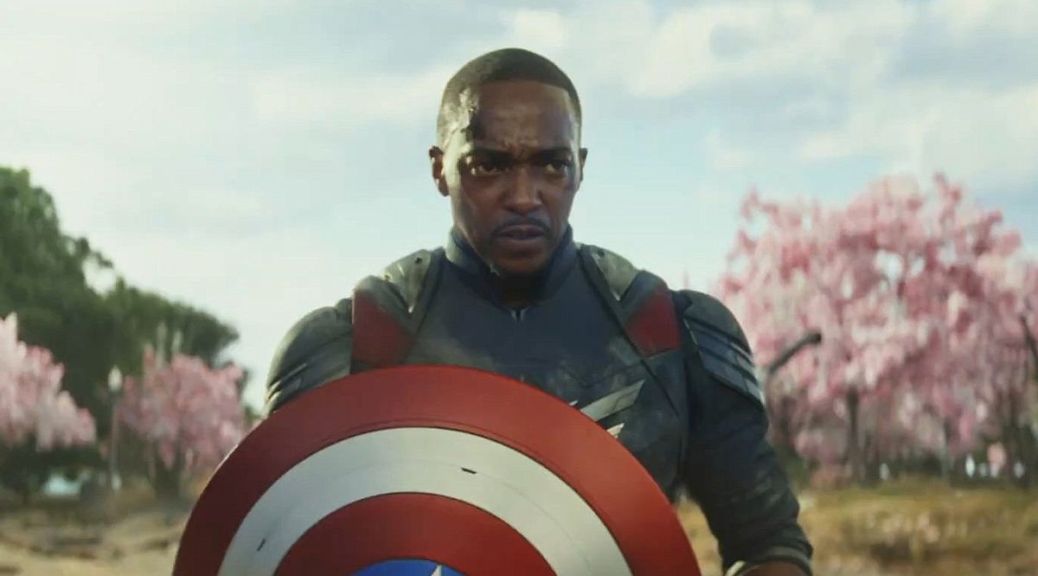
I’d be lying if I told you that I was a Marvel fan. I’d be lying if I told you that I have held even an iota of anticipation for the last phase of Marvel films (I didn’t even watch The Marvels). That said, I can’t clearly see how a Marvel fan would get much of satisfaction out of the MCU’s latest outing, Captain America: Brave New World. Unless you are a die-hard stan for fictional metals from the Marvel universe, even the easter eggs in this are going to come off as sub-par.

Marvel appears to be hoping that the back-half of their 2025 slate – made up of Thunderbolts* and Fantastic Four: First Steps – will drum up some sort of resurgence for the MCU. These films also serve as the bridge between Marvel’s fifth and sixth phases, meaning that two Marvel phases have gone by in only a short number of years and without much of a sense of narrative build. Part of this absence of ramped-up stakes (and, really, a lack of structural cohesion) stems from the company’s need to pivot away from their next would-be big bad, who was portrayed by Jonathan Majors before his ousting due to a criminal conviction for misdemeanor assault and harassment.
Captain America: Brave New World enters cinemas wearing this baggage of lack on its sleeve. Ostensibly a follow-up to the Disney+ show The Falcon and the Winter Soldier, Brave New World is a theatrical vehicle without much of a story to hang its shield on. So the film tries to make up for it by kicking that shield as it falls to the ground. And kicking it. And throwing it. And kicking it…
Sam Wilson (Anthony Mackie) and his protégé Joaquin Torres (Danny Ramirez) intercept an exchange of contraband adamantium. Adamantium is the central facet of a multi-national treaty that U.S. President Thaddeus Ross (Harrison Ford) is spearheading. Ross invites Wilson to the announcement of the treaty, where he also tells Wilson that he would like to restart the Avengers initiative.
Before any of this can happen, however, the treaty announcement is interrupted by an attempted assassination. The audience will recognize immediately that technology-induced brain washing is the culprit. It takes Captain America roughly 40 minutes of runtime to come to the same conclusion. We sit and watch scene after scene of watered-down espionage and clumsily choreographed fist fights as Cap traces the origins of the attack to a shadowy man from Ross’s (and the MCU’s) past. Considering this particular sector of the past is also the film that Marvel has worked hardest to ignore, the reveal here is not especially interesting or meaningful.
For most of the film, the major threat is this man speaking cryptically over a phone and the occasional Manchurian Candidate activating and working to ruin Ross’s reputation. It is a circular plot with circular action that culminates in what you’ve probably already seen in a trailer: Ross succumbing to the hulking monster inside of himself. The film is a lesser Manchurian Candidate with repetitive acrobatics and a cameo from Red Hulk. If that sounds fun to you, so be it. Otherwise, either film adaptation of The Manchurian Candidate will probably suit you just fine.
For what it’s worth, the recasting of Ross (who had previously been played by the late William Hurt) works to the film’s favor, as Ford is easily the most watchable thing this movie offers. The gravitas he brings to a handful of monologues prevents his character’s storyline from fully slipping into the quicksand that is its cliché emotional appeal (an estranged father-daughter relationship so forced-in that the resulting cameo is shocking if only because the actress bothered to show up to set).
Aside from Ford, the acting is fine and the writing is hackneyed. There is little verve underneath the empty gestures toward coming out of the shadows of your predecessor, the perils (?) of government oversight, and the value of camaraderie. Nothing new under the sun. But hey, at least there’s a bunch of punchy punches and stabby stabs!
Captain America: Brave New World: D+
As always, thanks for reading!
—Alex Brannan (Letterboxd, Facebook)
 CineFiles Movie Reviews