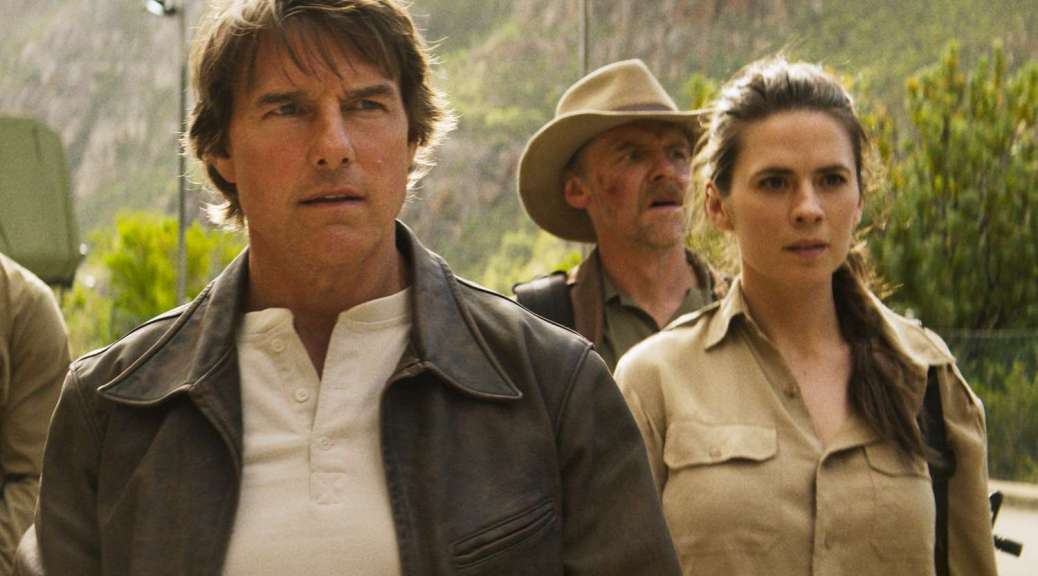
After nearly 30 years, the Mission: Impossible film franchise is finally (maybe) coming to an end. As a time capsule, it has tracked Hollywood’s A-list golden boy Tom Cruise through multiple eras of Hollywood blockbuster. In 1996, the town was dominated by movies led by actors who could “open.” That list of talent who can sell a movie on their star power alone has long since shrunk into (arguably) a single digit number.
Cruise has fought to remain on this dwindling list, largely hanging his hat on the franchise that allows him to tout death-defying stunts and globe-trotting exploits. The franchise has grown with his outsized ambition, bloating into epics of grandiose international espionage with ludicrous plots and lengthy (and often exquisitely choreographed) set pieces.
For those that enjoy the fare, the ballooning insanity of the franchise’s stunts (and runtimes) is not only accepted but encouraged. It is only expected, then, that Cruise and director Christopher McQuarrie would fully embrace the epic scale with this Final Reckoning. At nearly three hours in length, this eighth installment spares no expense when it comes to indulging in Ethan Hunt’s grand sendoff. It’s a long goodbye. Too long.
I have a penchant for complaining about movie runtimes, and sometimes this stems merely from impatience. Mission: Impossible – The Final Reckoning, however, has genuine size and pacing problems. The difference between this last hurrah and the last go-around, Dead Reckoning (what was meant to be the first in a two-part climax to the series) is night and day.
Dead Reckoning was also almost three hours long. But it moves like a freight train (not least of which because it features a sublime final act on a runaway train). Both halves of this Reckoning have intensive plotting that paint the walls from beginning to end. There is a difference, though, in how the audience is expected to digest the dense and fantastical exposition. In the previous film, the plot is a means to a beautifully high octane end. In The Final Reckoning, we are asked not only to care about the lovable band of IMF agents (some of whom have been dutifully deputized by Hunt), but also the inane tall of a world on the brink of total geopolitical collapse.
The plot of The Final Reckoning is both a direct continuation of Dead Reckoning and a culmination of every mission Ethan Hunt has ever enacted on-screen. The story strains endlessly to weave threads across the eight films, to varying degrees of credibility and success. This is more excusable, to my mind, then the constant halts that the film takes to explain what is actually happening in this world-ending plot.
The present existential threat comes from a rogue super AI who is on the verge of consuming all of human knowledge and hacking into the major world powers’ nuclear arsenals. Gabriel (Esai Morales), a former acolyte of this AI and a man blinded by the pursuit of absolute power, holds the key to accessing (and potentially stopping for good) the “Entity” AI. Hunt, along with his ragtag team of old and new friends (Simon Pegg, Hayley Atwell, Ving Rhames, Pom Klementieff, and Greg Tarzan Davis), must travel the globe in a race against a literal doomsday clock to squash Gabriel and isolate the Entity.
If this sounds more outlandish than the wackiest of Ernst Stavro Blofeld’s megalomaniac schemes, that’s because it is. And it plays out just as silly as it all sounds. The only problem is that the script plays it dead serious, as if this is the most crucial and important film about our political moment one could hope for from a Hollywood blockbuster. The problem is that it’s all nonsense, and the film would be much better off indulging in the campy Bond villain thing.
The Mission: Impossible franchise is at its best when it invests its time in Hunt’s obsession with camaraderie and the risks he runs when trying to protect his loved ones at all costs. The Final Reckoning takes great pains to continually articulate this running theme, and it does approach something resembling previous installments when it puts characters’ lives in imminent danger. It’s too bad that every time this happens, we have to cut away to another scene of characters we are meeting for the first time breathlessly describing the urgency of this Entity situation.
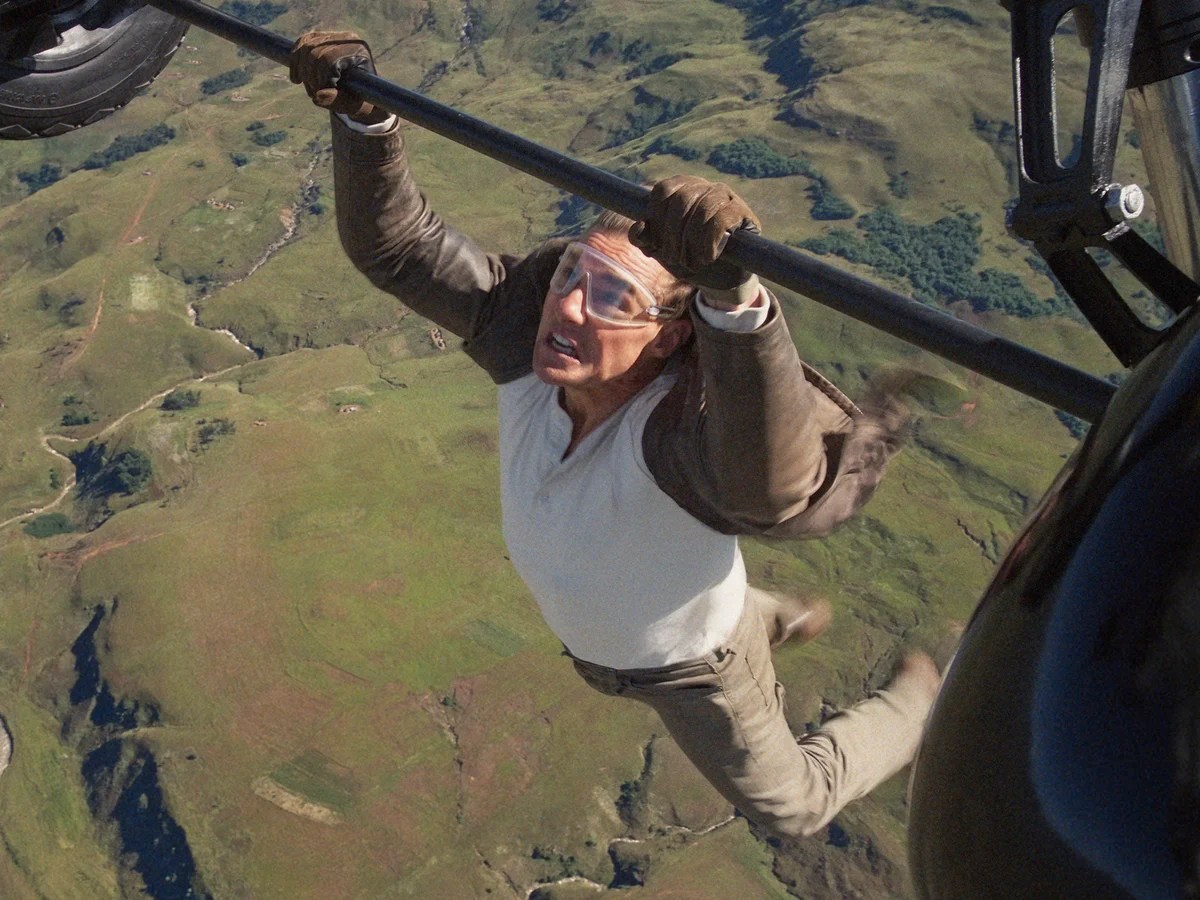
It’s almost comical, the extent to which characters exist solely to be redundant cogs in a meaningless plot machine. There are upwards of six more military bureaucrat characters than this script needs to accomplish its task, and there are multiple scenes of explaining what is happening which slow the pace of the action and needlessly lengthen the runtime. Yes, this plot is convoluted beyond belief, but that doesn’t mean we need the import of coordinates, server rooms, decompression chambers, and all the yadda yadda stuff explained to us more than once. This isn’t what makes these films exciting. Tom Cruise hanging from a biplane…that’s what we’ve signed up for.
And the exhilarating stunts are really too far and few between in this one. The best of these films have memorable set pieces that are storyboarded, choreographed, and shot brilliantly. Aside from this biplane sequence (which comes well into the film’s final hour), I won’t be remembering any of these sequences.
It is a bit of a shame that such an exuberant franchise ends on such a flat note. It is hard to make the “it could have been worse” argument when this may be the last time Cruise plays Hunt on the big screen. Because it hardly could get much worse, in the context of the Mission: Impossible franchise. Even John Woo’s maligned second film had flare and a distinctive style (not to mention an adequately lassoed plot).
Mission: Impossible – The Final Reckoning: C+
As always, thanks for reading!
—Alex Brannan (Letterboxd, Facebook)
 CineFiles Movie Reviews