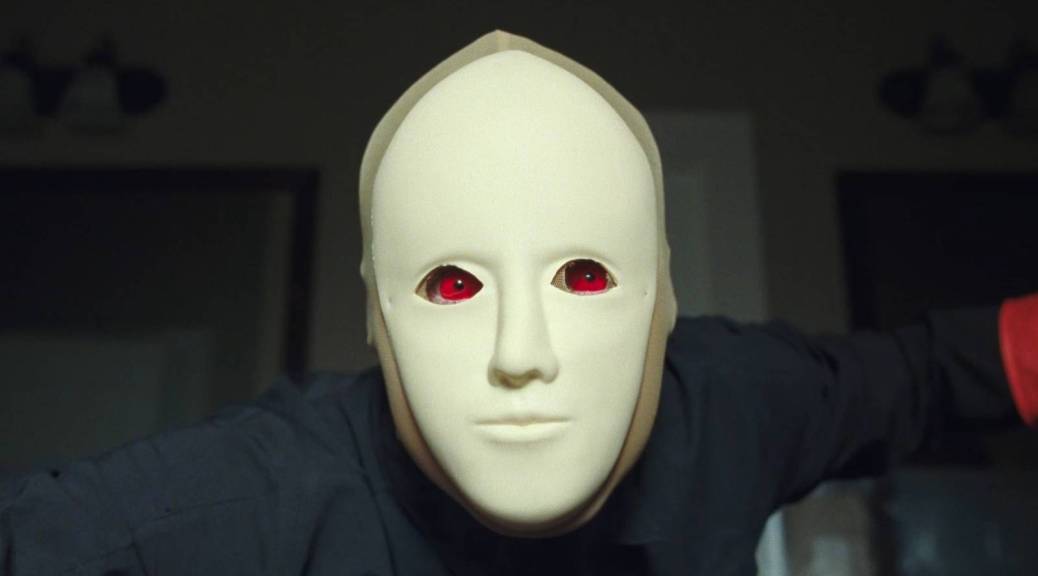
Have you watched Faces of Death, the cult VHS tape from the late-1970s that purported to show real-life deaths?
This is what I want to ask all of gen Z. I imagine my follow-up question would inevitably be: Have you heard of Faces of Death? We surveyed 100 people, and the top answer on the board is:”Huh?” Survey says, at number two, “I guess, kinda.”
The notion of invoking the IP of Faces of Death in the 2020s immediately intrigued and confused me (I say “invoke,” because this isn’t a remake). As a millennial, the tape existed for me only ever as a curious object from the past, not a scandalous object but a thing to check off the “what’s the most fucked up movie I can watch in my teens” list. Trying to reinvigorate the mythic, video nasty allure of it for the internet generation feels odd, because Faces of Death (1978) feels tame by today’s standards of exposure to violence.
Luckily, this is the exact angle that director Daniel Goldhaber and his scripting collaborator Isa Mazzei take when re-contextualizing the film for the present day. In the world of Faces of Death (2026), Faces of Death (1978) is a forgotten object. It is only heralded by the most hardcore of gore-heads [we know this, because the protagonist’s roommate (Aaron Holiday) is seen watching a Herschell Gordon Lewis film, then later calls Faces a “classic”]. Without this character conveniently front-and-center in the life of Margot (Barbie Ferreira), she may never have made the connection between the tape and a circulating series of viral videos which appear to be restaging the tape’s staged stunts.
Margot works at an online streaming platform called Kino (it’s effectively TikTok) as a content moderator. She spends her work hours listlessly clicking through flagged videos that range from pornography to WorldStarHipHop-style fist fights to filmed deaths. She has the choice to categorize the videos in any number of different ways that would get them banned, but most often she lets them stay online. This is because her boss incentivizes moderators to have an open heart to all things grisly (and a steel gut to match). The platform’s motto may as well be “give the people what they want,” as the line gets tossed around enough that the message rings louder and clearer than it needs to. Big Tech platform = bad, immoral, and willing to corrupt its users for the sake of the financial bottom line.
If the anti-internet messaging is heavy-handed, it does effectively portray a desensitization that allows for a shock cinema curio like Faces of Death to fade into obscurity. Goldhaber’s most effective filmmaking comes in these first few scenes, where Margo is sitting at a desk, AirPods in, monotonously consuming largely vile content. There is an unsettling feeling—a feeling Margot herself does not seem to have—that comes with the anticipation of what might pop up next when she clicks through to the next flagged clip.
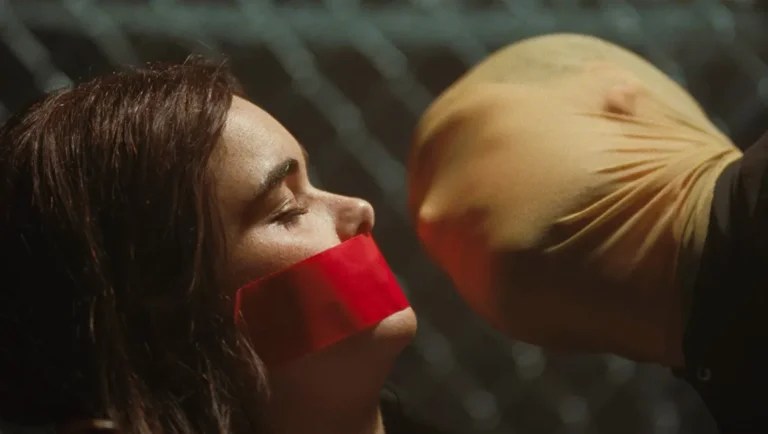
And the juxtaposition of these videos to the ones that will fuel the plot is nicely creepy. The videos recreating scenes from the 1978 film (accompanied by a prominent #fod2024, in case you were unsure) are expertly shot to look like exactly what they are in the fiction of the film: a modern day amateur filmmaker shooting snuff films to look as though they were remnants of the video tape era. They look just real enough to cause Margot concern, and just fake enough to prevent the company from feeling that they are obligated to do something about it. So…Margot decides to do something about it on her own.
This is when the film pivots to something less interesting and incisive. The cat-and-mouse game between Margot and the copycat killer (Dacre Montgomery) is initially engaging. The film cuts back and forth between the two to demonstrate how Margot is entering into a level of danger she may not understand. This is all well and good, until the film grinds to a halt when it decides to propel its drama using Reddit threads.
Calling this the “Redditification of Faces of Death” is by far a disservice to what Goldhaber and Mazzei are trying to accomplish. If anything, there is an ironic humor to the ways in which the online platform interfaces mesh with the idea of virality that the film poses about the 1978 film (at one point, a character calls Faces of Death the first viral video, which is quite silly, but the tape has to be contextualized for the audience in some way). The film’s most needling bit of dark humor involves Margot allowing heinous videos to remain on the Kino platform while also banning instructional videos about proper condom use for having “sexual content.”
On the other hand, the film’s insistence that the internet has desensitized entire generations of people and ought to be “cleaned up” (Margot’s crusade as a content moderator is to do just that, because of a tragic viral incident in her past) feels more like a product of Reddit than an indictment of Reddit. And while the film did not need to do either in order to be an effective thriller, it leans into a nihilistic vision of the world that comes off as parodical. The blink-and-you’ll-miss-it two-scene cameo from Charli XCX is enough evidence of this, as the character does not even come off as a human being. Perhaps one could argue that the content moderation department of an online platform is a setting that lends itself to emotionally hollow characters, but the film suggests that the world is filled with such compassionless people.
Maybe the world really is filled with such people. Maybe that is to be blamed on an attention economy hard-coded to give us the worst stuff humankind can come up with. As fictionalized in horror, it just feels like low-hanging fruit to lean on the image of a faceless horde of commenters typing things like “unalived him for our pleasure” and reacting to the quality of a snuff film with “nice work!” Beyond revising a well-marketed schlock tape for the modern day, tech-horror needs constant finger-to-pulse revising to remain sharp. Red Rooms felt more cutting than this film. Last year, I read the novel The Sluts by Dennis Cooper, which was released in 2004 and has a similar rhetorical project as Faces of Death. That book feels resonant to internet culture now in a way that this film does not.
None of this is to say that Faces of Death (2026) is not entertaining. It is far more entertaining and aesthetically slick than the film from which the title derives. The set pieces which follow the killer as he exploits technology to locate and stalk individuals are exciting. The setting of mannequins and red electrical tape that define the aesthetic of the video recreations is nicely eerie. And Barbie Ferreira is more than capable in the lead role. The escalation of her performance (to near primal levels by the film’s climax) is compelling enough on its own to make up for many of the film’s shortcomings.
Faces of Death: B-
As always, thanks for reading!
—Alex Brannan (Letterboxd)

