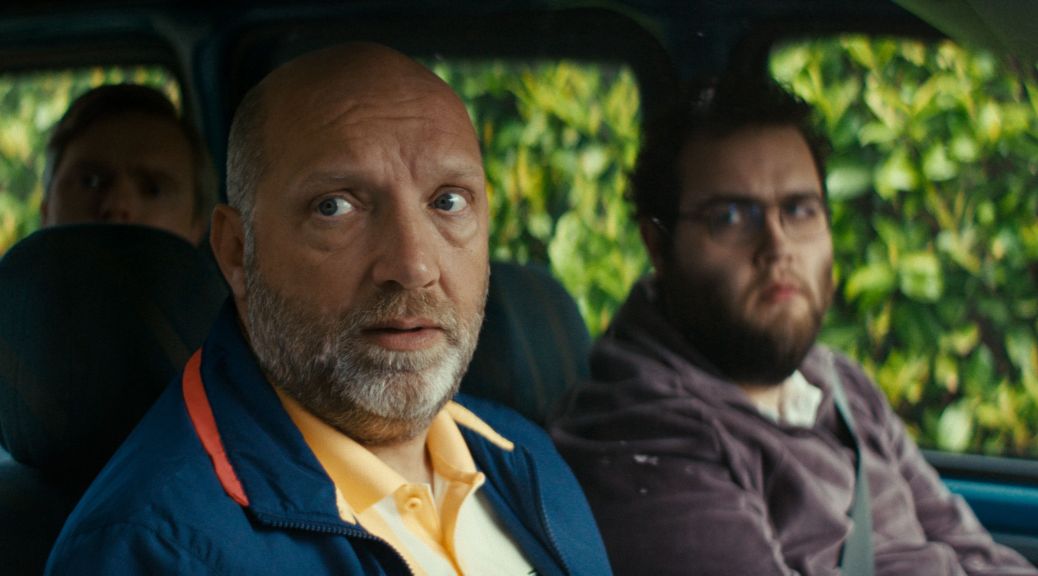
After School is screening as part of the 2026 Fantasia International Film Festival.
“We’re men, but we also have a little boy inside of us … a little baby inside.”
After School is something of a comedy of errors, in which the prime error is leaning into all the wrong ideas about masculinity. It is not a satire, per se, but its characters present as exaggerated versions of what the “manosphere’ produces and invites. Edwin (Rutger de Bekker) is a schoolteacher who has no control over his classroom. This is a metaphor for his life in general. His coworkers mostly step over him. His wife left him for a shaman peddling hallucinatory drugs. His daughter is embarrassed of him. His students have made him an internet lolcow, posting classroom pranks to the point where his viral status causes him to lose a promotion. He is the perfect candidate for a midlife identity crisis.
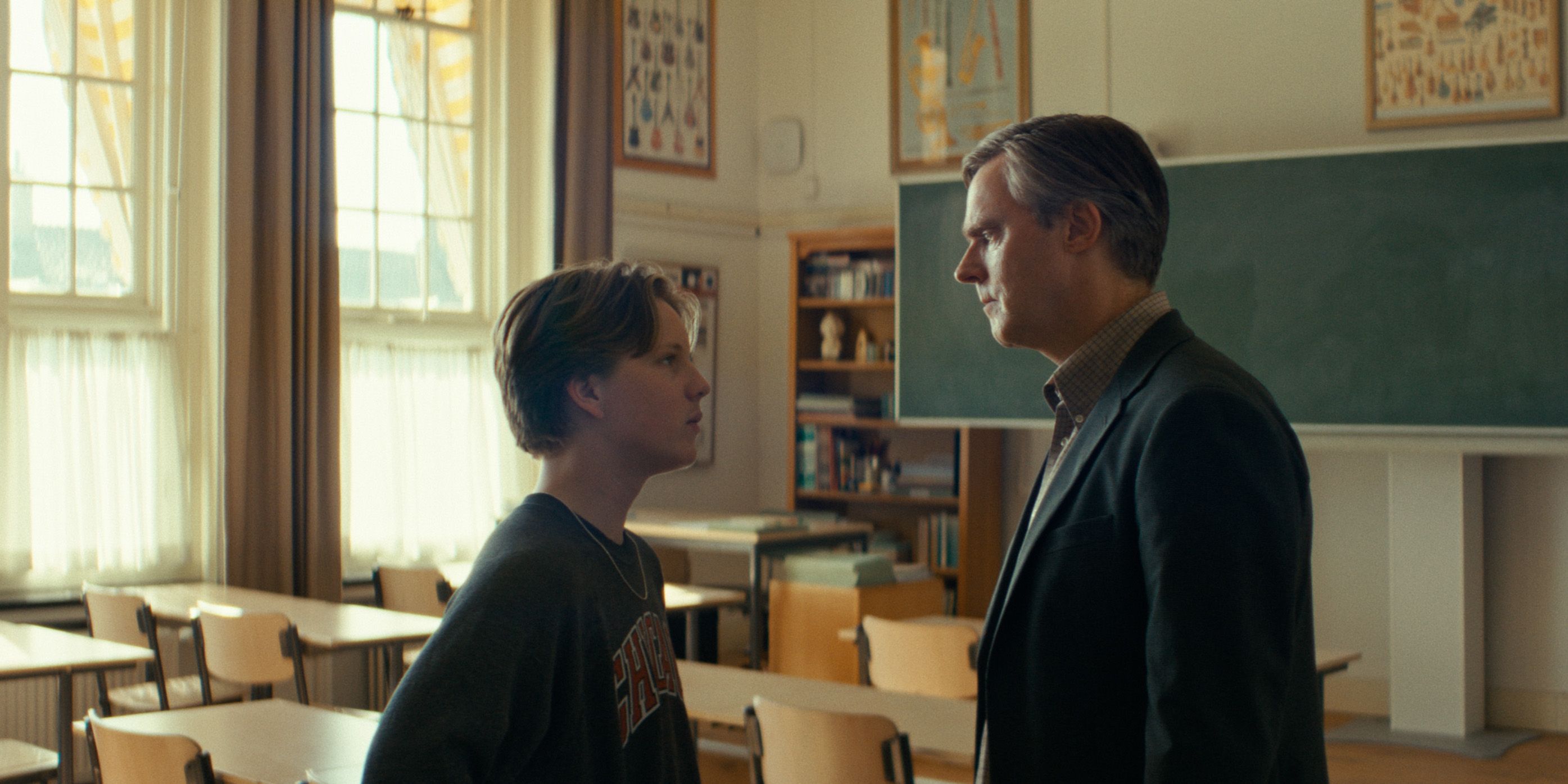
When alcohol, boxing, and male camaraderie combine, Edwin is inspired to stand up for himself in the classroom. The next time his students prank him (conveniently in a parking garage instead of in front of the rest of class), his anger gets the better of him and he slaps a child’s tooth out.
This student, Bastiaan (Kylian de Pagter-Colin), uses video of this event as leverage to blackmail Edwin into doing more embarrassing things. The student also catfishes another teacher, Peter (Ruben van der Meer), into sending a lewd picture. The student and the teachers involved are all frail, pathetic people whose schadenfreude we are meant to point at and laugh. This is all well and good, albeit the film has little to say about these characters’ fragility. It’s all an absurd exercise in feeling superior.
Superiority humor has never been that interesting to me. It is low and simplistic, easy to manufacture and often lacking in subtlety. It is best when layered into other styles of humor. There are funny jokes in After School, but they almost all exist outside of the bounds of the central premise. Unfit police officers making inadequate suspect sketches and throwing burritos at closed windows. Closing the door on a doghouse, only for the dog to slip out the obvious opening on the other side. A perfectly timed clip-on bowtie. These jokes are nice bits of levity laid over the top of the exhausting characters spiraling out of control as they desperately work to save their skins from prison time.
What saves the film from being simply a story about despicable people acting stupidly are aspects of the main characters which redeem them from being purely pitiable persons. For Edwin, this is plain to see. He is an idiot, but he ultimately means well. The script smartly gives him a few moments with his daughter that illustrate his good intentions. Peter, his aggressive phys ed teacher friend, is more of an idiot and initially less redeeming of a character. But the film hints at him hiding a deep loneliness, where Edwin may be his only real friend in the world.
These aspects result in some mild moments of emotional catharsis for these characters. Certainly, a more mean-spirited version of this same film could exist. While the characters can be exhausting, it still works well to resolve their arcs as the film does. The tone is willfully silly, and this is deployed to occasionally charming ends.
After School: B-
As always, thanks for reading!
—Alex Brannan (Letterboxd)

