August 3, 2026 10:15 am
No Rest for the Wicked is screening as part of the 2026 Fantasia International Film Festival.
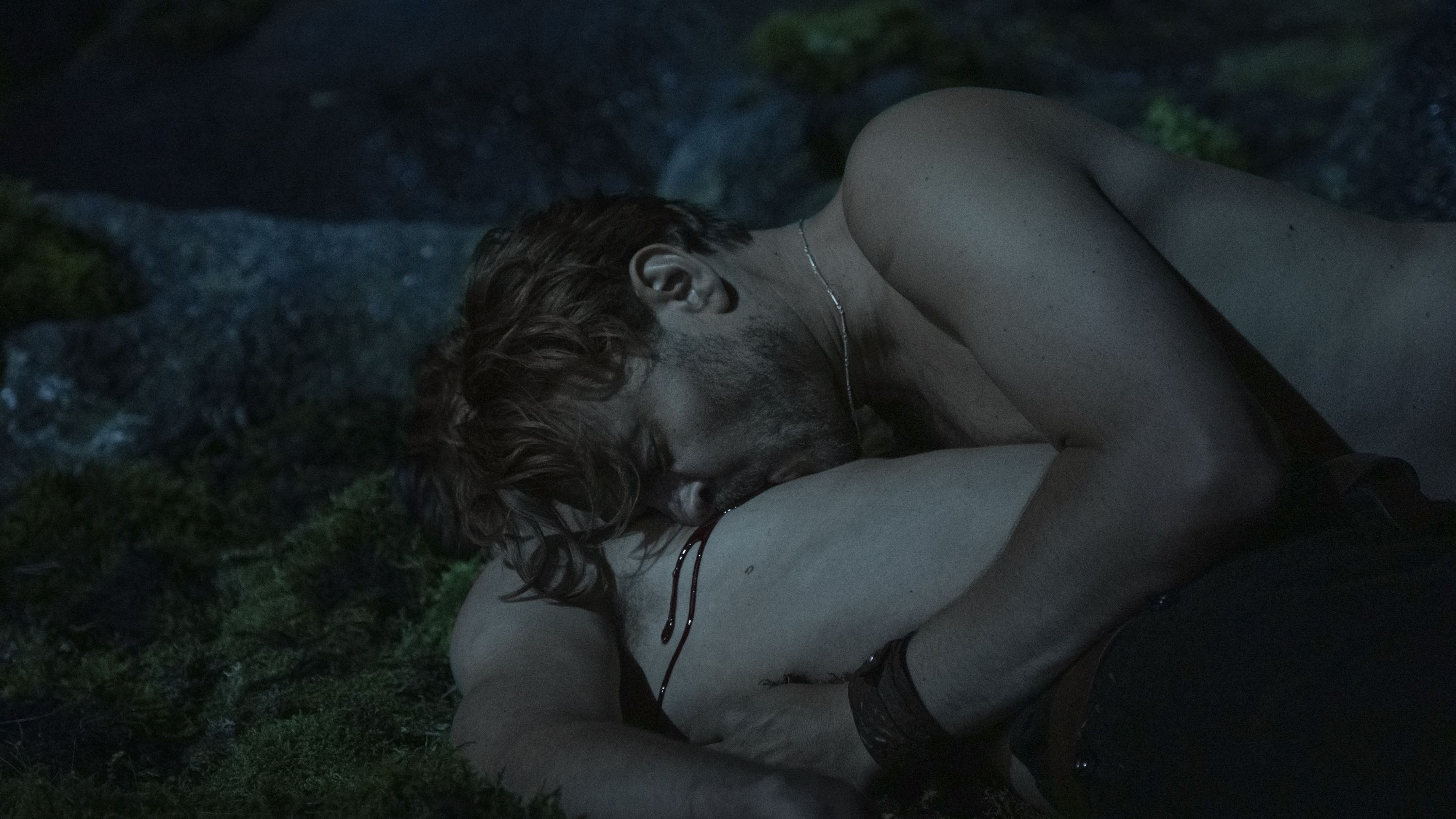
The headline of Kalle Skovsbol’s No Rest for the Wicked may as well be: beautiful men drenched in fog. I would not have thought that to be a strong enough attribute to carry a feature-length film, but I probably would have been happy watching nothing but haunting shots of men walking through dense fog. When it is shot this expertly, why not?
Of course, Skovsbol and screenwriter Rasmus Birch have much more on their minds than this cool (in terms of color temperature and slang) aesthetic. The slowly simmering romance at the core of No Rest for the Wicked eventually gives way to a light bit of vengeance-fueled folk horror, all in service of a simple but evocative gesture of eternal love.
Set in 1862 on the Faroe Islands, the film centers around the humble lives of a young fisherman Baldur (Egor Venned), his widowed mother Asla (Sofia Nolsoe Mikkelsen), and the strapping Danish whaler Helge (Pilou Asbæk) who finds himself in their home. A quick, burning passion ignites between Baldur and Helge, a romance that they must keep secret from the rest of the small community. Without spoiling much more of the plot, it is important to note a shift in the narrative that results from sudden death and the inability for a character’s final will and testament to be carried out. There is a potent metaphor in the character’s simple request, its denial, and the supernatural elements that crop up as a result of this denial. And it all wraps up quite elegantly.
I could quibble with how this shift in tone also results in the gorgeous cinematography taking a backseat to other considerations. But the aesthetic is so striking in the first half of the film, that it lingers in the mind like a rolling fog. There is also a sense of tragedy to the story that could come off as a cliché, but I think this is mitigated well enough by the ethereal folk horror elements, which add a dreaminess (yet nevertheless tactile quality) to the queer romance.
A second headline for No Rest for the Wicked might say something about the lead performances, which are both commendable. Both men are playing understated and often sedate. Still, in just a handful of scenes of them together, the characters are able to express the full range of their emotions. There are paragraphs of unspoken dialogue between these two characters, which Asbæk and Venned have to play with their faces and body language. Asbæk, in particular, is the standout. The way his face subtly shifts from moment to moment during lingering closeups is impressive.
No Rest for the Wicked requires the viewer to let themselves be immersed in the environment and the quiet journey of these two characters. There is not much else to the film but this — the folk horror elements, it should be said, will likely come off as underwhelming if one goes in expecting this to be a horror film. This is a brooding, soft, and slowly unraveling romance that asks the viewer to wrap themselves up in the sensuality of the experience. When this is achieved, it is often quite a striking experience.
No Rest for the Wicked: B
As always, thanks for reading!
—Alex Brannan (Letterboxd)
Posted by Alex Brannan
Categories: All Movie Reviews, Drama, Like It, Long Reviews (>400 Words), Romance
Tags: 2026, egor venned, Fantasia Festival, kalle skovsbol, movie review, no rest for the wicked, Pilou Asbaek, queer cinema, romance
Mobile Site | Full Site
Get a free blog at WordPress.com Theme: WordPress Mobile Edition by Alex King.