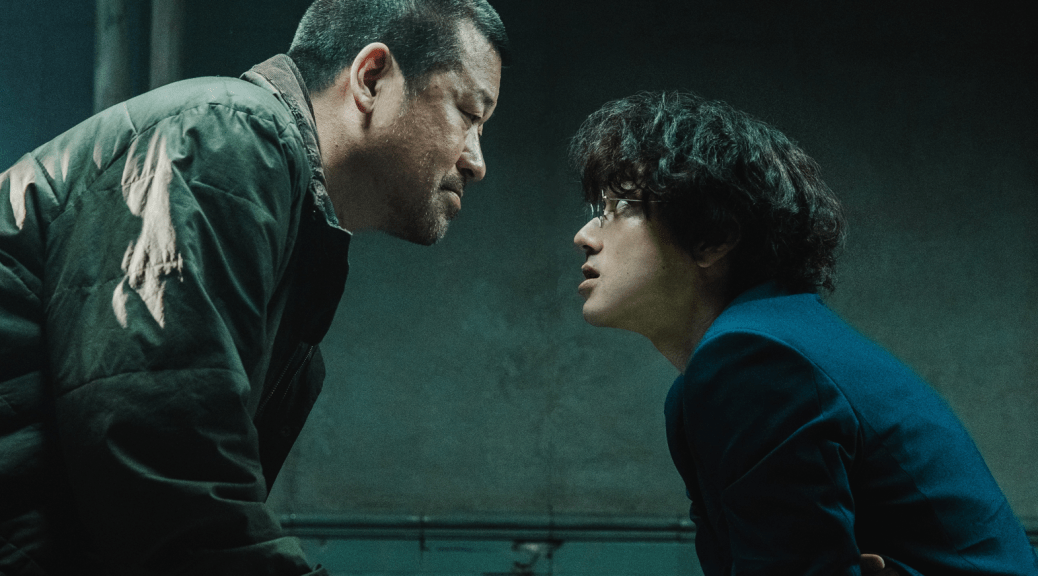
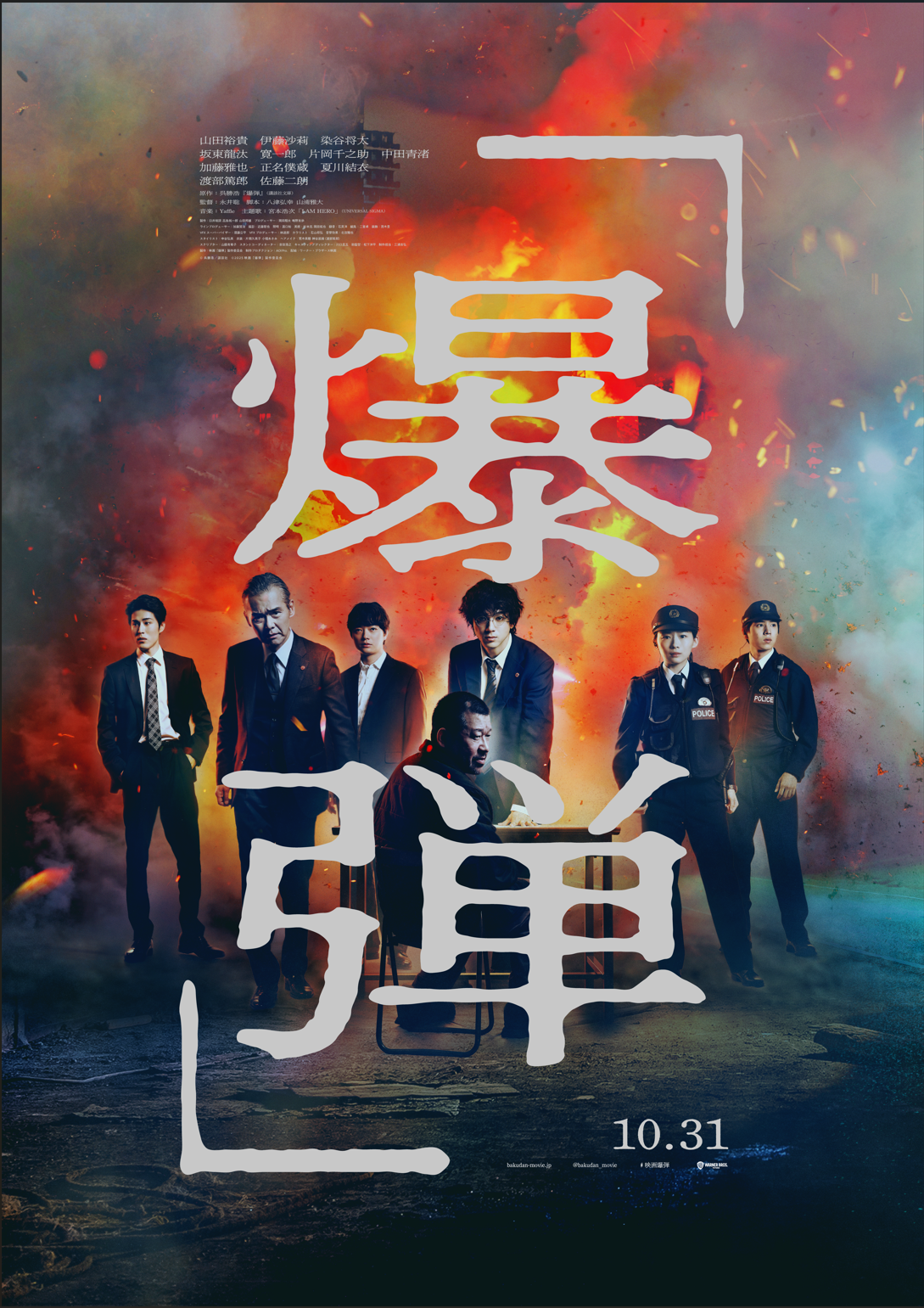
Suzuki=Bakudan is screening as part of the 2026 Fantasia International Film Festival.
A man named Tagosaku Suzuki (Jiro Sato) is arrested for acting disorderly while intoxicated. While in police custody, he hints at the possibility of a large-scale bomb attack on the city—a bomb that then goes off. The drunk man (who doesn’t seem to be all that drunk) claims to have psychic knowledge of a series of bombs that will go off that night, leaving the police force with no choice but to listen to everything the man has to say in an attempt to prevent further harm.
Suzuki=Bakudan is essentially a showcase for actor Jiro Sato, whose self-declared psychic character is the center of the plot. The entire police department is wrapped around his finger, as he seems to have all the information regarding impending bomb explosions around Tokyo. The nervy but deliberate Suzuki controls every conversation within the interrogation room (where most of the film takes place). Sato’s performance is quite good. It transcends his derivative character, and he keeps the repetitive interrogation scenes from becoming tiresome.
The film shares DNA with Se7en, in that the mastermind behind the violence leaves breadcrumbs for the detectives, riddles which obliquely reference both individual locations of the attacks and the grand design behind it all. As the riddles get solved, the audience learns more about the characters involved. It’s a nice storytelling device, albeit one that is not particularly novel. At least, the mystery keeps the action exciting through the first half, after which point an abundance of outlandish twists stretch the film out to an unnecessary length.
Aspects of the film’s story are intriguing, but the deliberate plotting becomes something of an ordeal, as the riddles become repetitive and at times cliché. The way in which the plot revolves around a disgraced police officer doesn’t help any, as the script’s moral deliberations on the manner ultimately seem to fall on the side of it being honorable to support a police officer who flagrantly broke the law simply on the merits of “he’s one of us.” Call it a personal preference, but I’m not interested in a film didactically telling me that the best thing for society is blind faith in bureaucratic systems, even as we are watching them actively fail.
It doesn’t help that the film cares more about speaking in vague platitudes about morality rather than explicitly addressing what it lays out on the table. The final few scenes, which drag on, are covered wall to wall in these dialogues, which feign importance and philosophical weight without truly getting to the heart of anything. The script focuses so much on these vague (and vacant) appeals to morality that it tends to forget about the stakes of its diegetic world. There are motivations provided to characters for why they take part in the bombings, but it is hard to discern how these motivations relate to the speechifying and grandstanding about society. Seemingly, when all of the stones of the mystery are upturned, the questions about the equal value of life in an unequal society become a moot point, rendering much of Suzuki’s provocations to be more akin to distractions than to important philosophical conundrums. Yet the film still wants to conclude with some larger statement, which doesn’t fully track with what we’ve just watched.
In the end, Suzuki=Bakudan is best viewed as a tense mystery crime thriller at a fairly big scale, which is entertaining enough but which doesn’t have much to say about the complexities of the moral compass. This is not a thinker, even if it poses as one. You have to be swept up in the convoluted mystery plotting in order to fully enjoy the experience, and even then you’ll have to look past some glaring flaws in the script.
Suzuki=Bakudan: C+
As always, thanks for reading!
—Alex Brannan (Letterboxd)

