Blaise is screening as part of the 2026 Fantasia International Film Festival.
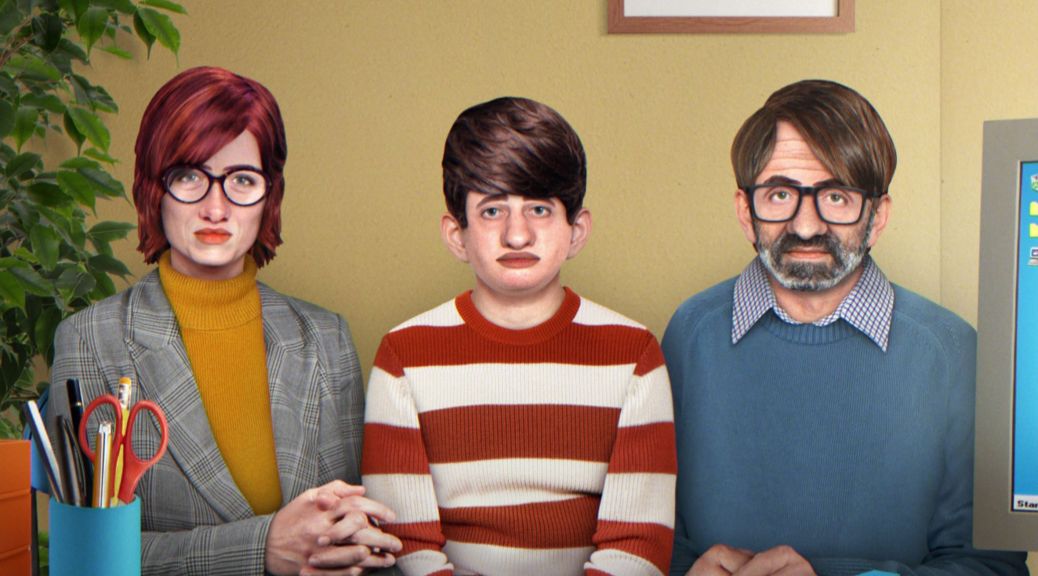
Blaise opens with the eponymous character, an awkward teen who struggles socially, in a meeting between his parents and the school counselor. His mother asks if he is having troubles connecting due to being gifted, to which the counselor resolutely answers, “No.” This is Blaise (Timeo), a remarkably unremarkable young man with little direction and no desire to mingle with his peers. When forced to attend a party, he wallflowers until a woman named Josephine (Nina Blanc-Francard) inserts herself into his space.
The film follows these characters as they navigate their individual insecurities. Blaise’s father (Jacques Gamblin) is described (by someone he considered a friend) as a moron without a political consciousness. The film’s political consciousness comes with a tone of curt acidity. Class divide is presented as both absurd and as the central defining factor in interpersonal relationships. Blaise’s family live a relatively comfortable, petit bourgeois lifestyle, but Blaise pretends to be impoverished to garner sympathy from Josephine. His mother Carole (Lea Drucker), meanwhile, gets a middle management job from Josephine’s wealthy father, where she attempts desperately to not come off as cold and hostile to her employees. Josephine, wanting to relate to Blaise, hides her opulent wealth by also pretending to be lower class and politically radical.
In the background, actual political radicals debate the means and ends of revolution while often also cosplaying as something that they are not. However, as much as many of these characters’ storylines intersect with politics, the film itself seems to only be interested in politics as it pertains to the silly performativity of insecure people. Economic precarity and political protest are a means of putting Blaise and others into awkward situations that they are not socially capable of easily getting out of.
The sense of humor in Blaise is pat. Each scene unravels an awkward scenario to a logical punchline. Lying and misunderstandings lead to characters committing to actions they otherwise wouldn’t. These scenarios are carried out to extremes—the father’s insecurity over being called a moron leads him to obsession, Carole’s fear of being icy leads to one employee presuming that Carole is coming on to her, Blaise’s brush with revolution leads to Chekhov’s slowest-acting gun going off with a bang.
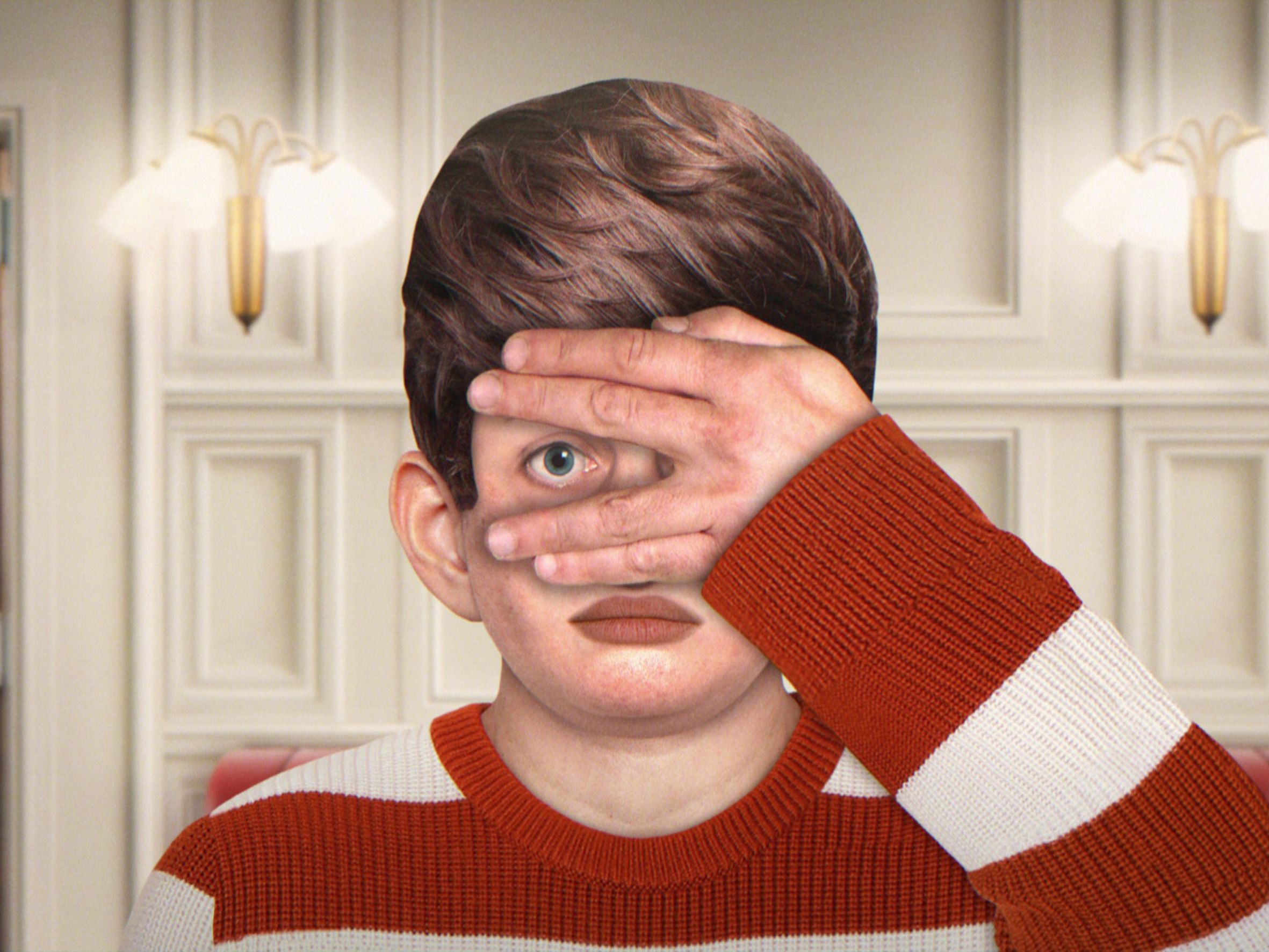
The animation style is the most compelling aspect of Blaise. It is semi-realistic 2D animation that has a flatness which nicely complements the comedic drollness. The film looks as awkward as its characters act.
Blaise is an intriguing film with an odd tone. Some of its scenarios carry out for longer than the joke requires–Jacques bumbling about the hospital is one example. Other scenarios–Carole’s storyline, in particular–are nicely timed with great awkward pauses and comedic edits. The film oscillates between comedic highs and lows, ultimately leading to a mixed bag.
Blaise: B
As always, thanks for reading!
—Alex Brannan (Letterboxd)

