With Black Mirror season five dropping on Netflix, the internet is adequately abuzz. Following the hit-or-miss experience of Bandersnatch, the new slate of Black Mirror episodes is understandably thin. With only three episodes to feast on, the binge-worthiness of season five is questionable.
But the real question is: how do these three episodes compare to the pantheon of Black Mirror episodes? Do they hold up as engaging, compelling mini-movies, or are they a disappointing lot?
Dexter Fletcher’s Rocketman flies in the face of other musical biopics. Not because it presents an entirely novel version of such a story, but because it presents the same-old cliched version and makes it a fantasy.
We hear the musician’s story straight from the horse’s mouth, as Elton Hercules John (Taron Egerton) struts into a group therapy session donning an ornate devil costume and heart-shaped glasses. He proceeds to tell his life story to the group. Through this framing, Rocketman sheds any preconceived notions that biopics have anything objective to say about their subjects. In the present, Elton can be an unreliable narrator. In the past, scenes from his life are laced with dreamy, musical bravado.
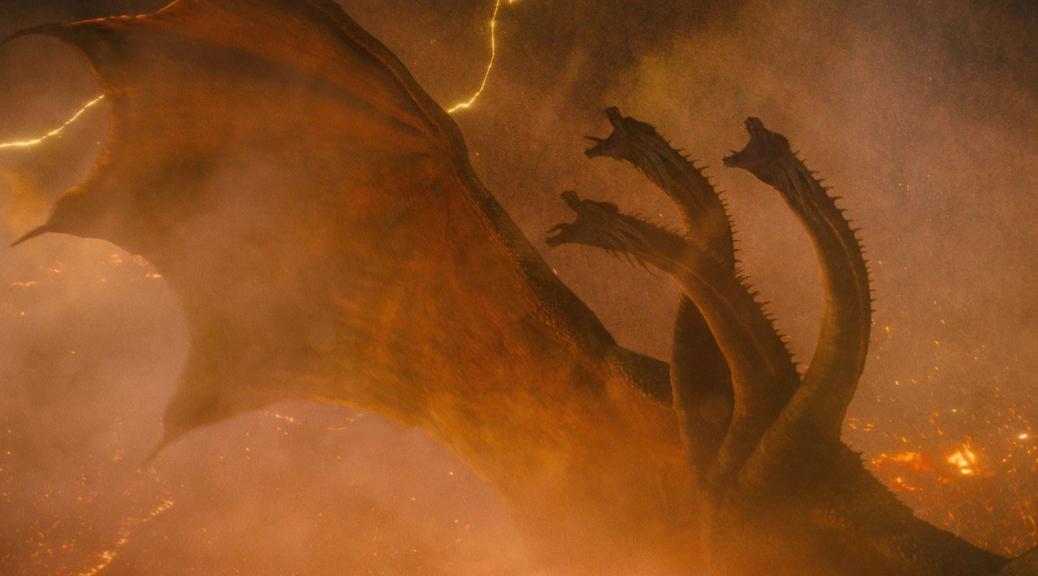
Say what you will of kaiju films, the best of them thrill and excite. They combine large-scale, city-devastating set pieces with the ground-level desperation of humanity to prevail in the face of armageddon.
The original Godzilla has in its cast of characters a dramatic blend of family dynamics, romantic interest, and political proliferation. The blend may appear shallow in terms of character depth, but it provides us with names and relationships that we want to see succeed.
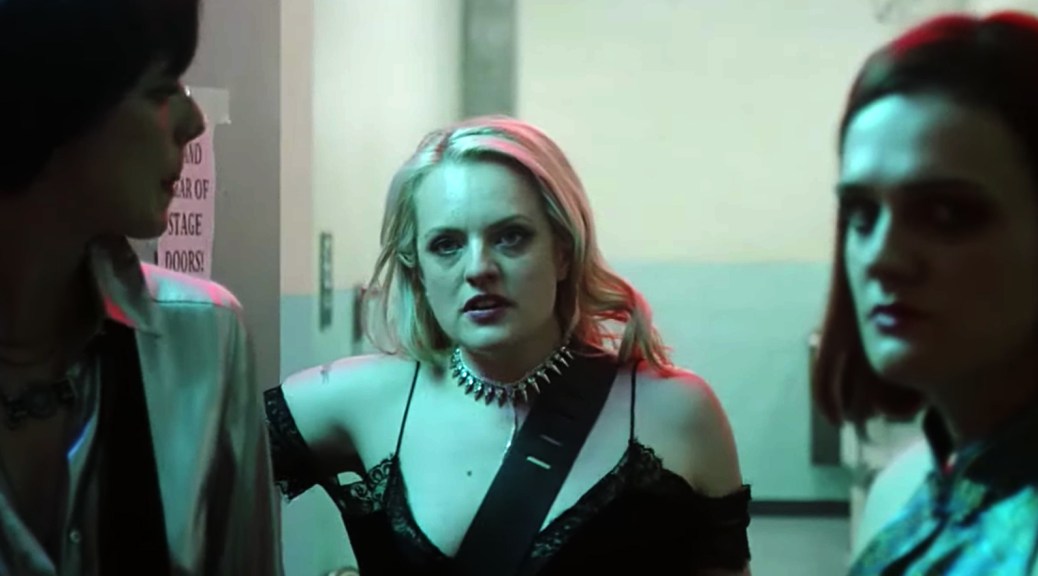
The first time we see the punk rockers of Something She perform in Alex Ross Perry’s latest, Her Smell, the lead singer and face of the group, Becky “Something” (Elisabeth Moss) sings: “I always flirt with death / I always flirt with death / I look ill, but I don’t care about it.”
The crowd erupts in applause. This is what they came to see, but they don’t really understand what they’re hearing. The lyrics to the song are truer than they may appear. After the show, Becky is a blur. Her child is brought backstage, but it is her bandmate Ali (Gayle Rankin) who takes her. Before Becky can confront her child, her ex-husband, and her manager she engages with her spiritual guru Ya-ema (Eka Darville), who is seemingly her first line of reasoning in her turbulent life of rock-n-roll vices.
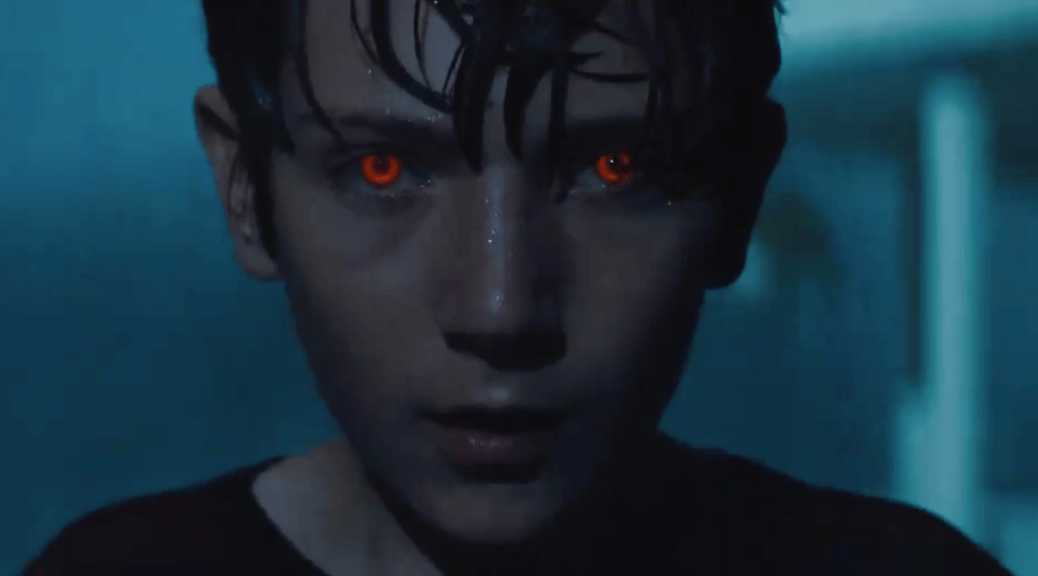
Think about Superman for a minute. He is an unnatural, unstoppable alien force. Sure, he is a force for good. But what if this near-omnipotent being chose to serve a different master: himself.
Brian and Mark Gunn’s script for Brightburn aims to envision what that “what if” comic would look like. It is speculative fiction, like how 50 Shades of Grey is its own story but everyone knows it started as Twilight fan fiction. The child who crashes to Earth in a spaceship is not Continue reading Brightburn (2019) Movie Review→
David Robert Mitchell’s Under the Silver Lake is an unsurprisingly divisive experience. It challenges you to bear witness to the unseemly realities of the wealth-power relationship of Hollywood while also presenting such realities with a greasy film of surreality. It is also a film that appears to relish in the masturbatory excesses of an over-sexed L.A.
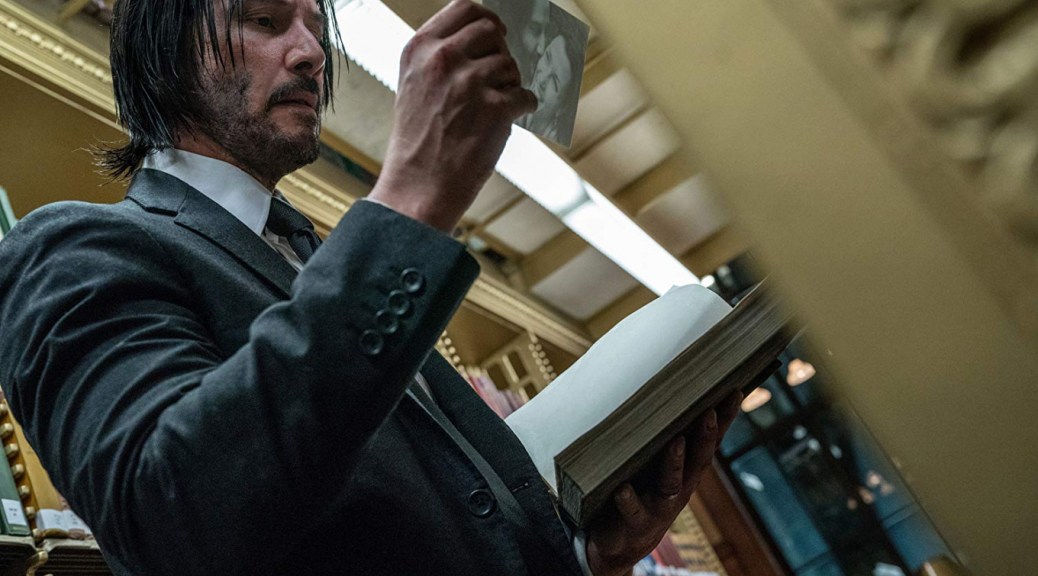
The John Wick series eludes criticism. Kind of. It is a series of films that knows its audience and knows itself. As such, a formal critique feels unnecessary. John Wick: Chapter 3 – Parabellum is a film that caters to the fans of the previous two films. If you’re not already in on these films, then this film won’t change your mind. If you’re in, then you know who you are and you’re already prepared to see Parabellum. My job is done for me, it seems.
All the same, there are highs and lows in Parabellum that I think are worth discussing.
There is a shot during what functions as the prologue chapter to The Wandering Earth whose awesome nature leads one to believe that this is more than merely some basic re-skinning of the sci-fi dystopian concept. Much of the film’s effects appear as the computer generated facades that they are, plasticky backdrops and accoutrements. So does this shot, but the gooey melting plastic of a planet in motion away from a star has a cosmic majesty to it, which director Frant Gwo captures superbly.
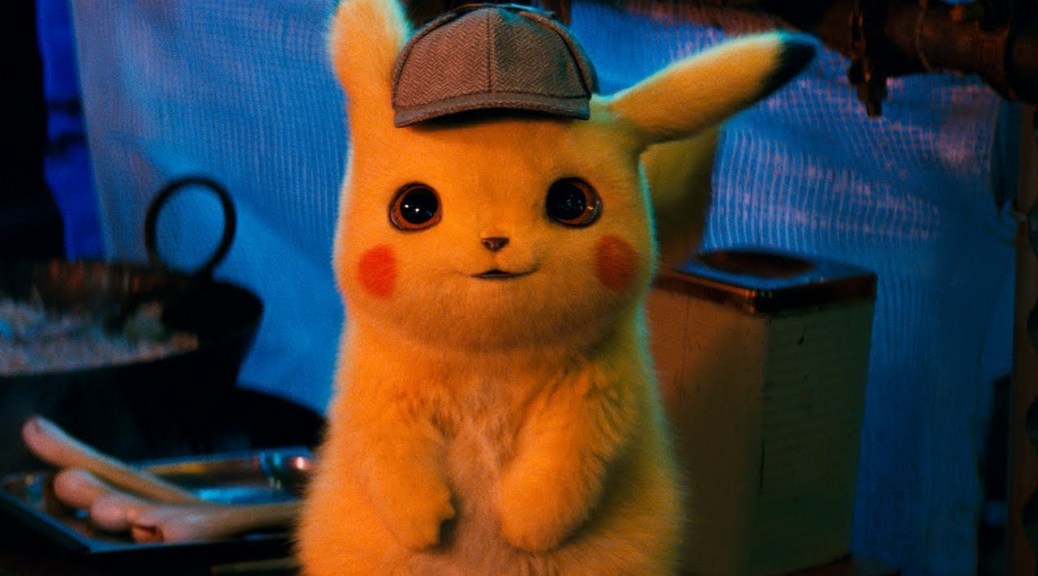
Pokemon is one of the biggest video game brands in history. As of 2017, it was the third best selling video game franchise in the history of the medium, behind Mario and Tetris. Its first generation of games, manufactured in 1996 for the Nintendo handheld console, the Game Boy, sold over 45,000,000 units.
The franchise quickly ballooned into a trans-media synergy that encompassed animated television shows, animated movies, trading cards, toys, and more video game installments. In a sense, it is a surprise that it has taken this long for The Pokemon Company to pull the trigger on a live-action film of its titular product.
Then again, there was the Super Mario Bros. movie.
I don’t understand the meme in which serial killer Ted Bundy is lauded for his physical attractiveness in spite of his villainy. Netflix is the prime source of the “hot Bundy” memes, and the memes do not do Netflix’s latest, Extremely Wicked, Shockingly Evil and Vile, any favors. Midway through Joe Berlinger’s film, a series of women are interviewed during an intermission from Bundy’s murder trial, and they stumble through statements that exult the alluring presence of Bundy in the court room.












 CineFiles Movie Reviews