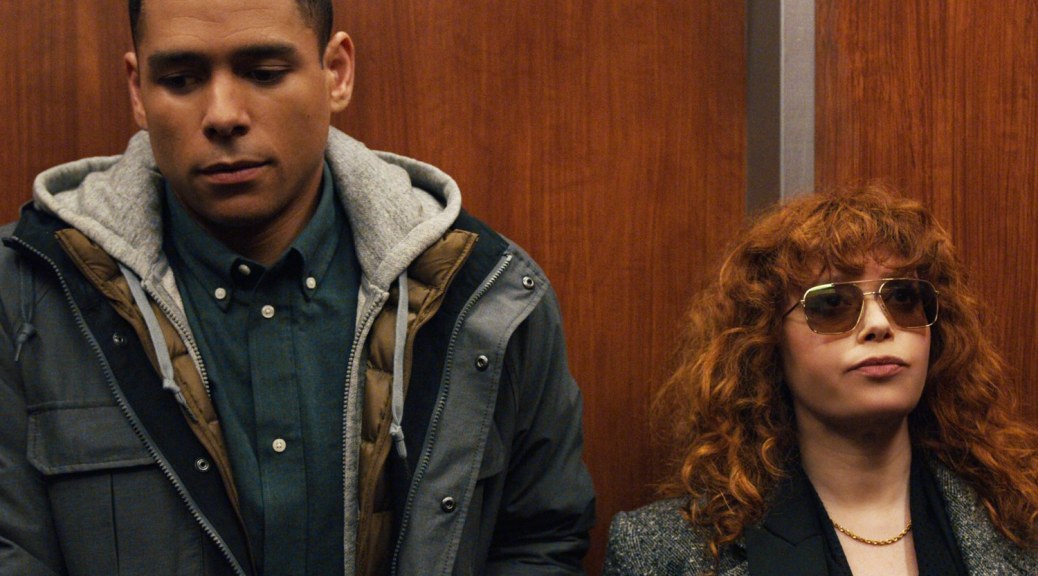
Nadia Vulvokov (Natasha Lyonne)—it’s like “Volvo,” but “with more letters and dyslexic”—wants little to do with her own birthday party. With a sigh, she exits her friend Maxine’s (Greta Lee) bathroom and enters the party. She does not mingle with her guests or accept any attention. She just smokes a joint with Maxine and picks up some schlubby academic type named Mike (Jeremy Bobb) for a one-night stand.
The LEGO Movie 2: The Second Part is just what implies; it is a second helping, a rehash of the surprise hit that tries to recapture the magic but ultimately falls short.
There is a fundamental disconnect in Cold Pursuit that, while being the film’s largest flaw, is oddly charming. To say that the film does not know what it is would be false, but it does not know how to fully achieve what it wants to be.
The film begins with a quote from Oscar Wilde: “Some cause happiness wherever they go; others whenever they go.”
I don’t think there is an awful lot to say about the 2019 races for Best Original Song and Best Original Score. One is barely a race, and the other has a standout front-runner with only minor competition.
This isn’t to say that the two categories are complete locks, but they are both pretty darn close.
Best Production Design is not necessarily the easiest Oscar category to predict in any given year, but there are clear signposts that make a film’s production design “Oscar worthy.” Period settings. Visually-striking set dressing. Something lavish, or else something historical.
Best Live Action Short Film may be the single hardest category to predict. Rarely does a front-runner appear, and even when one does an upset is always a possible scenario. I have a feeling that the winners in this category generally win by slim margins, as the vote comes down to personal preference over cultural or political relevance.
The short film categories are some of the hardest to predict. These films don’t receive traditional Oscar campaigns, which would act to suss out front-runners. In lieu of that, one must look at general trends, distributors, aesthetic qualities, and word of mouth.
What is often the operative question with the two sound categories is whether or not they will go to the same film. More often than not, if a film stands out for either editing or mixing, it also stands out in the other.
This year, I think there is a case to be made for both the split and the sweep.
The Oscar for Best Makeup & Hairstyling is sometimes more of an award for most makeup and hairstyling. The nominees in the category this year don’t prove to be an exception to this trend, which is not to say there isn’t quality work in the makeup, hair, and prosthetic work in the three films. It is simply to say that these aspects of mise en scene are quite noticeable.




 CineFiles Movie Reviews