With Black Mirror season five dropping on Netflix, the internet is adequately abuzz. Following the hit-or-miss experience of Bandersnatch, the new slate of Black Mirror episodes is understandably thin. With only three episodes to feast on, the binge-worthiness of season five is questionable.
But the real question is: how do these three episodes compare to the pantheon of Black Mirror episodes? Do they hold up as engaging, compelling mini-movies, or are they a disappointing lot?
There is a shot during what functions as the prologue chapter to The Wandering Earth whose awesome nature leads one to believe that this is more than merely some basic re-skinning of the sci-fi dystopian concept. Much of the film’s effects appear as the computer generated facades that they are, plasticky backdrops and accoutrements. So does this shot, but the gooey melting plastic of a planet in motion away from a star has a cosmic majesty to it, which director Frant Gwo captures superbly.
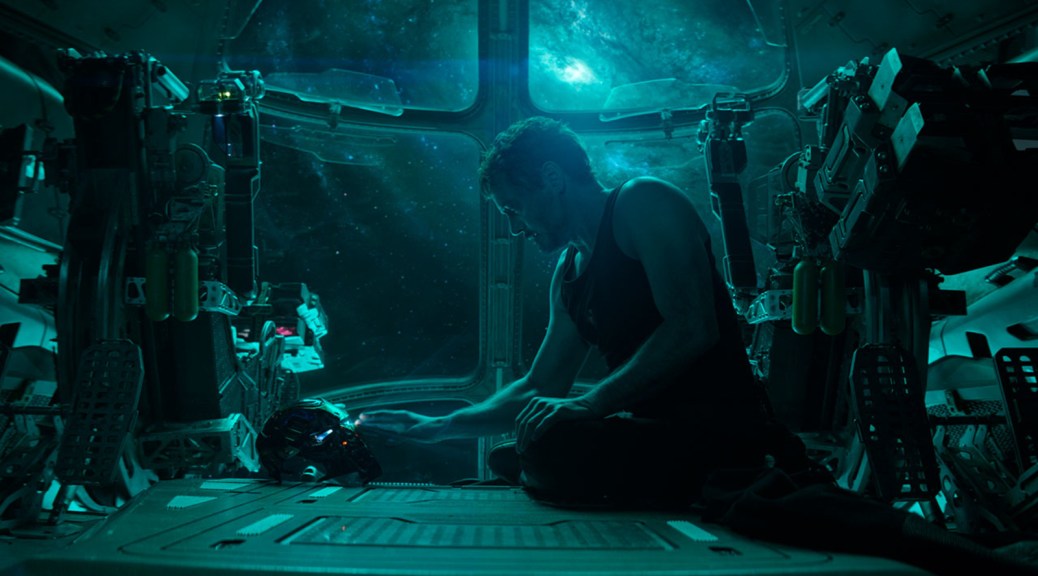
Listen, I’m a cynical man—so much so that oftentimes I find myself more excited by the number crunching that goes along with super hero blockbusters than I am about the films themselves—but there is a moment in Avengers: Endgame that is awesome in the traditional sense of the word; it fills one with a sense of awe.
It is a moment in the doorway of the film’s climax (to its back is a climactic sequence, in its own right), and it succeeds as a fulfilling moment solely because the business mechanisms that comprise Marvel Studios have allowed for the latitude to make such a broadly fan-service gesture a genuine emotional high point.
Rupert Wyatt’s Captive State begins with the trope of the ominous, overlapping news audio playing over black screens and production logos. The newscasters speak of an “apocalyptic” state. Then, we see a city of Chicago in chaos. From the vantage of noxious, tight handheld closeups inside of a car, we witness civilians trying to evacuate and being contained by the military. The car we occupy gets through the blockade, just barely, but is stopped by an elusive, pitch-colored, form-shifting alien.
It is 1927. Imprisoned wizard Gellert Grindelwald (Johnny Depp) is being transferred from New York to London to be tried for his crimes (in case you forgot Grindelwald was a criminal, see title). Known to be a silver tongue, conning others into doing his bidding Charles Manson-style, we are informed that the Magical Congress of America has removed his tongue (we learn later, inexplicably, that this is untrue). When Grindelwald is set out on flying carriage, it is revealed that he used his seductive trickery to coax a Congress employee into springing him free.
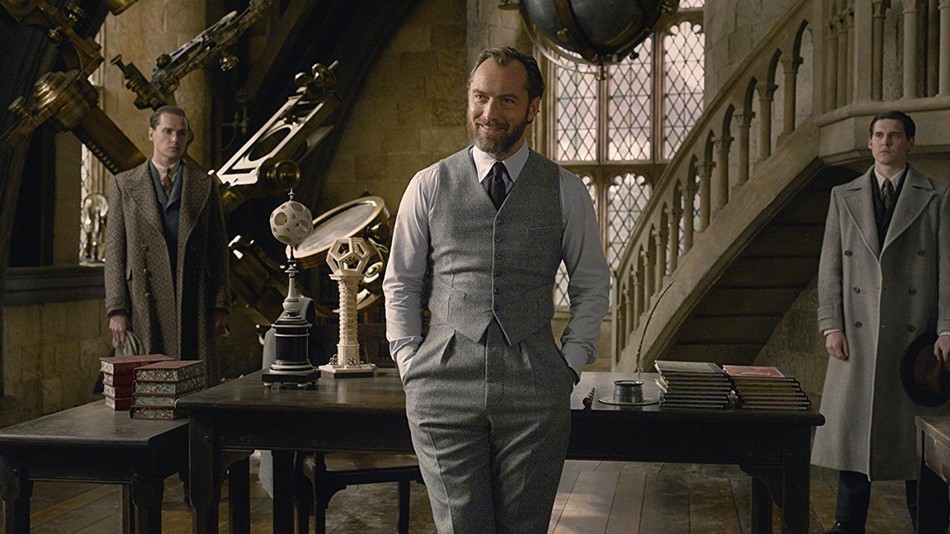
Once free, Grindelwald has two goals: kill Albus Dumbledore (Jude Law) and create a genocidal cult of wizard supremacists.
Should I start with “Cheddar Goblin”? Or does that warrant its own article?
Mandy is the second film from writer-director Panos Cosmatos, his follow up to the 2010 film Beyond the Black Rainbow. It is a hazy dream of a film—a dream or a nightmare, depending on your perspective. At times, it spins inside an LSD vision alongside its drug-addled characters. Other times, it is a ’70s-inspired exploitation splatter flick. On both accounts, Cosmatos imbues the rural forest landscape with a fantasy quality. Even as fantastical elements are granted real-world explanations, the characters feel as if they are trapped in a psychedelic snowglobe of cosmic mayhem.
It’s pretty badass.
The eponymous Mandy (Andrea Riseborough) lives with her partner Red (Nicolas Cage), a grizzled lumberjack with a penchant for terrible jokes, in a cottage deep within the forests near the Shadow Mountains. She sketches drawings, reads fantasy novels, and is fascinated by astronomy. Together, the couple lounges through their nights watching B-movies.
Kin may secretly be the most infuriating movie of the Summer.
It starts out innocuous enough: a stereotypical depiction of Detroit, in which everyone we see is either struggling financially or making ends meet through crime. Eli Solinski (Myles Truitt) is suspended from school after a fight and spends his days doing chores for his adopted father (Dennis Quaid). His brother Jimmy (Jack Reynor) is en route, just out of prison.
Jimmy is the root of all of the family’s problems, it seems. He owes money to the people that offered him protection in prison. When Taylor (James Franco) catches wind that Jimmy may not have the $60 thousand required, he Continue reading Kin (2018) Movie Review→
It is 1977. Croydon, London. Enn (Alex Sharp) and his two punk friends sneak into a club and subsequently search for the after party they weren’t invited to. Instead, they stumble upon a much different party. A much stranger party. Men and women, clad in leather suits that accent their genitals, mill about. People in blue body suits dance robotically. People in yellow body suits enjoy their individuality and physical form.
Sorry to Bother You is the sort of film that wants to do so much, and delights so much in each thing that it attempts to do, that it is hard not to get caught up in the manic world and unique artistic voice. On the other hand, the further you go into unpacking the densely-packed funhouse of oddities in the film, the harder it is to wrap your head around why you enjoyed the viewing experience in the first place.
To be clear, it is difficult to explore this funhouse without delving into crucial plot details that are better experienced untarnished, as predictability is a word that holds no meaning in the final third of the film. But there is something that Continue reading Sorry to Bother You (2018) Movie Review→