There is a shot during what functions as the prologue chapter to The Wandering Earth whose awesome nature leads one to believe that this is more than merely some basic re-skinning of the sci-fi dystopian concept. Much of the film’s effects appear as the computer generated facades that they are, plasticky backdrops and accoutrements. So does this shot, but the gooey melting plastic of a planet in motion away from a star has a cosmic majesty to it, which director Frant Gwo captures superbly.
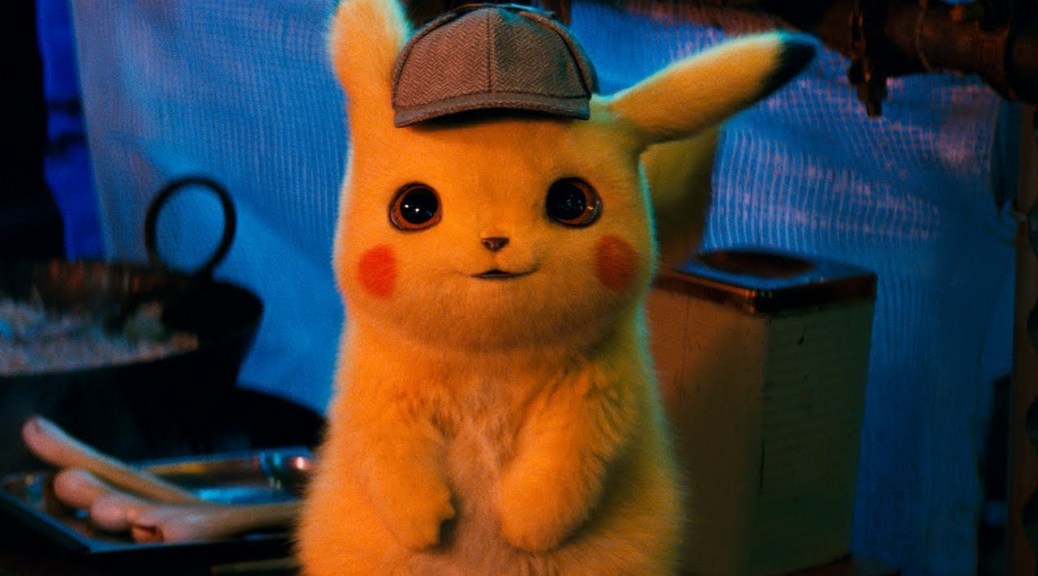
Pokemon is one of the biggest video game brands in history. As of 2017, it was the third best selling video game franchise in the history of the medium, behind Mario and Tetris. Its first generation of games, manufactured in 1996 for the Nintendo handheld console, the Game Boy, sold over 45,000,000 units.
The franchise quickly ballooned into a trans-media synergy that encompassed animated television shows, animated movies, trading cards, toys, and more video game installments. In a sense, it is a surprise that it has taken this long for The Pokemon Company to pull the trigger on a live-action film of its titular product.
Then again, there was the Super Mario Bros. movie.
I don’t understand the meme in which serial killer Ted Bundy is lauded for his physical attractiveness in spite of his villainy. Netflix is the prime source of the “hot Bundy” memes, and the memes do not do Netflix’s latest, Extremely Wicked, Shockingly Evil and Vile, any favors. Midway through Joe Berlinger’s film, a series of women are interviewed during an intermission from Bundy’s murder trial, and they stumble through statements that exult the alluring presence of Bundy in the court room.
“Teen Spirit” is an American Idol-esque pop reality competition in which teens sing and dance in hopes of achieving a record contract. Violet (Elle Fanning) is a seventeen-year-old who sneaks out at night to perform to a near-empty dive bar. She croons to one listener, silhouetted by a neon heart sign. “I was a fool,” she repeats until the song fades, and the one man (Zlatko Buric) claps.
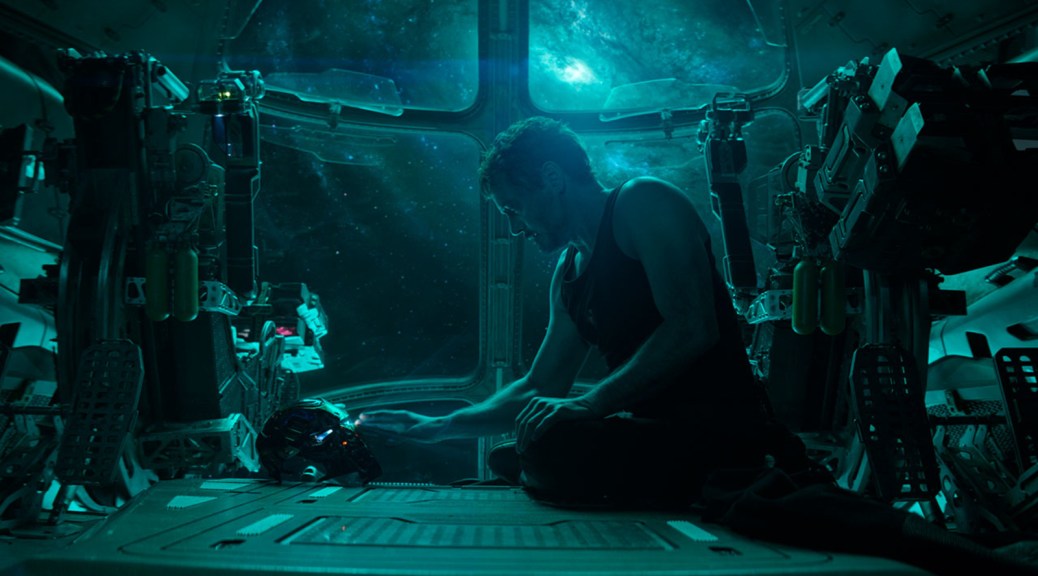
Listen, I’m a cynical man—so much so that oftentimes I find myself more excited by the number crunching that goes along with super hero blockbusters than I am about the films themselves—but there is a moment in Avengers: Endgame that is awesome in the traditional sense of the word; it fills one with a sense of awe.
It is a moment in the doorway of the film’s climax (to its back is a climactic sequence, in its own right), and it succeeds as a fulfilling moment solely because the business mechanisms that comprise Marvel Studios have allowed for the latitude to make such a broadly fan-service gesture a genuine emotional high point.
My favorite film of 2018 was Chloe Zhao’s The Rider. It is, in my mind, a transcendent experience of intimacy and empathy whose connection to reality enhances its visceral, heartfelt case study of cowboyism.
While watching Laure de Clermont-Tonnerre’s The Mustang, I couldn’t shake the memory of watching The Rider for the first time. Both involve plot mechanics involving horse training and thematic notions of disillusioned masculinity. They both attempt to take a quiet, restrained look at one man’s emotional growth, as well.
God save David Harbour. He has had a strong career up to this point, most notably as a mainstay on Stranger Things. And he does an admirable job filling the shoes of Ron Perlman in Hellboy, the Neil Marshall adaptation-reboot that is doing Harbour no favors.
Harbour brings a similar gruffness to the Mike Mignola character that Perlman does, and there is enough of his charm shining through to cut through the cheesy one-liners, some of the worst one-liners in a blockbuster film since…the ’80s?
Christian Petzold’s Transit explores fleeting moments of humanity within intensely oppressive fascism. Then, it explores the tragedy of hanging any semblance of hope on such moments of humanity, as the moments are infinitesimally small against a backdrop that is increasingly bleak.
The film progresses like a prequel to 1984. Paris is under siege, and the fascist occupation is spreading rapidly. It happens so fast that Continue reading Transit (2019) Movie Review→
The 1989 Pet Sematary film is insane. By today’s standards, it is a dated horror aesthetic, and its scare factor is minimal. But its climax is a circus act of violent hilarity.
It makes for a good campy half of a Stephen King double feature, which is how I first came upon the film. Juxtaposing it with Kubrick’s The Shining may have caused some tonal whiplash, but that only amplified the enjoyment of seeing an undead child prey upon a rural family and their neighbor, played by the often imitated yet inimitable (sorry John Lithgow) Fred Gwynne.
Confusion washed over me when I first saw the trailer for Kevin Kolsch and Dennis Widmyer’s Pet Sematary remake. What tone could this film possibly strike that would grant it success? The original was not Continue reading Pet Sematary (2019) Movie Review→
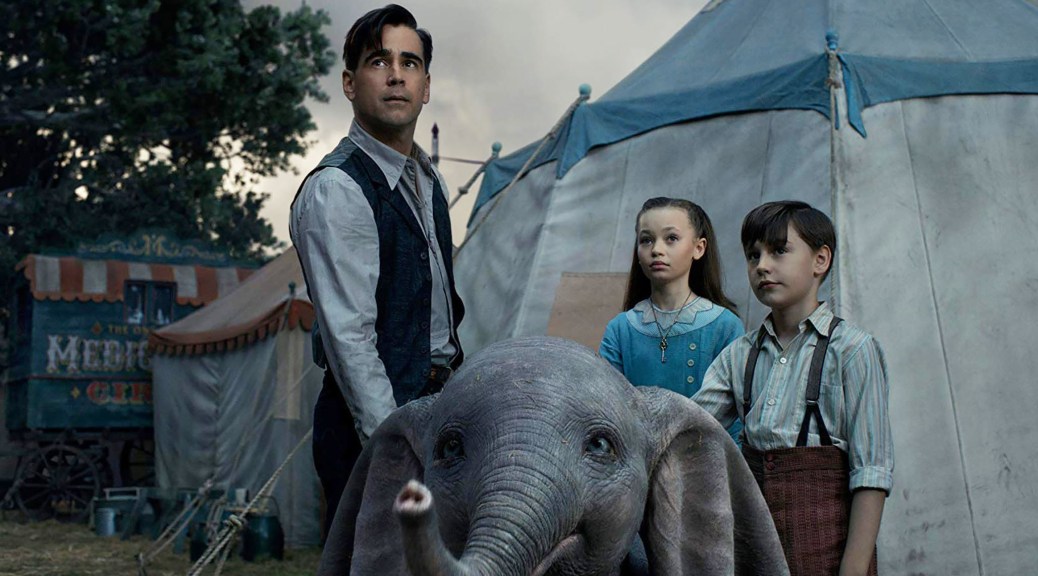
Tim Burton’s live action Dumbo film begins by tracing, whimsically, the path of traveling Medici Bros. Circus. Burton flourishes this ride, particularly as the train passes through a tunnel that morphs into the twirling red and white of a circus tent.
As energetic as this opening trek is, the Medici Bros. (“Bros.,” it bears noting, is a misnomer. A single Medici (Danny Devito) serves both roles), the circus has Continue reading Dumbo (2019) Movie Review→







 CineFiles Movie Reviews