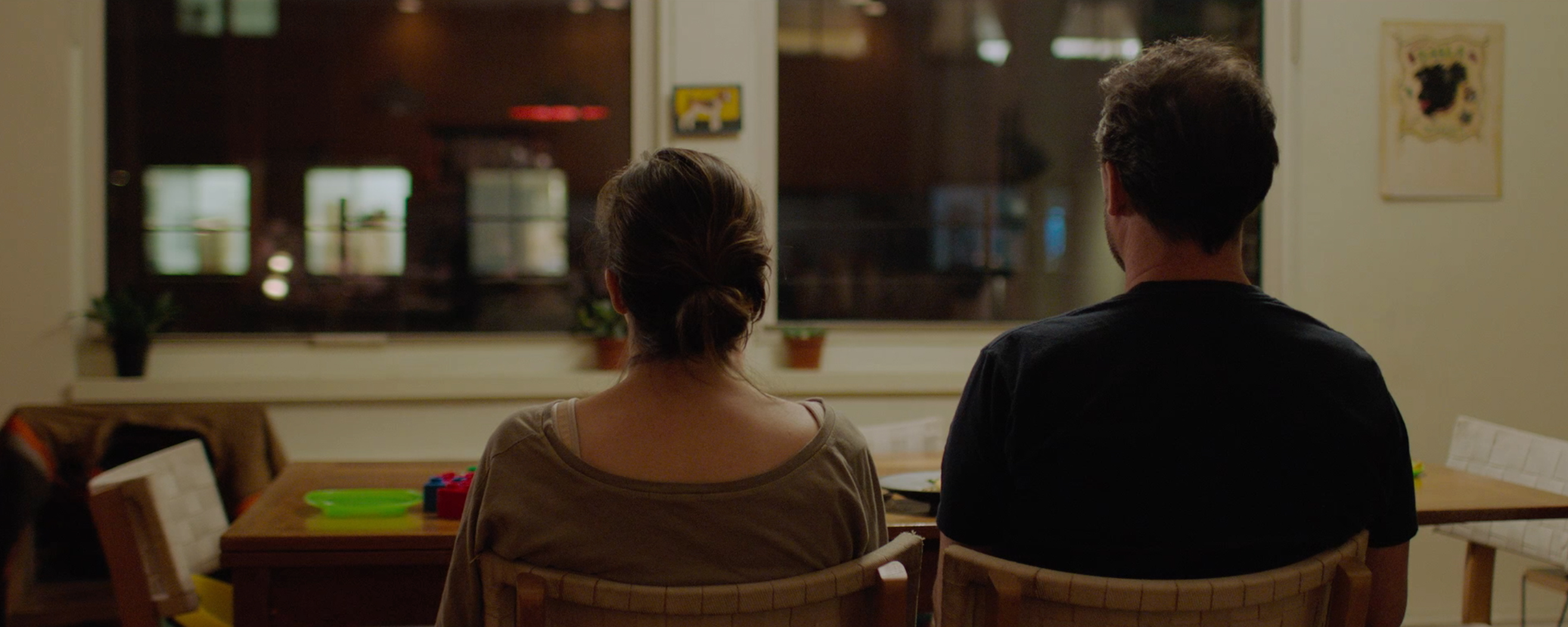
Alli (Maria Dizzia) and Jacob (Greg Keller) are married with two children with another on the way. They live a fairly humdrum life until they notice a young couple move into an adjacent building. The pair of 20-somethings (Juliana Canfield and Bret Lada) don’t like the idea of blinds, even when they have wild, free-spirited sex.
Alli and Jacob’s vantage point to this couple begins shifting their views on their own relationship, and these shifts continue even after they have their next child.
I am not the type of person who remembers a film’s score long after I’ve left the theater. I kind of just let the score wash over me in the moment, and then it slowly escapes from my mind after I have written my review. Perhaps, then, I am no authority on the Best Original Score category. However, this year’s race has a pretty clear divide from which we can delineate frontrunners.
Listen, I know we could talk about Oscar snubs all day and it wouldn’t make any difference. To an extent, expressing any amount of emotion for the Academy and their decisions is a waste of energy. It is all futile and arbitrary, and it’s better not to get caught up in it.
But, I mean, there’s no love for “Glasgow” in the Best Original Song category? It is a great song inside a lovely little film called Wild Rose. It deserved some recognition here. Seriously, what the f–
The batch of Best Live Action Short Film nominees this year is strong. It will be difficult to narrow this down to a single frontrunner, no less so because the Academy sometimes makes odd choices in this category.
The short film categories can be somewhat frustrating in terms of availability. ShortsTV generally puts out a limited theatrical run the week before the Oscars, but even then it can be difficult to find depending on your area. As such, I must do my annual obligatory apology for not seeing every film. Daughter is the missing link this year, but it is not favored to win. So I will talk around the issue.
As for the others: Hair Love is on YouTube, Kitbull is on Disney+ and YouTube, Sister is on director Siki Song’s website, and Memorable is on Vimeo.
In some years, I have trouble determining who will win in the Best Production Design category. There are so many different ways to design a film’s story-world, that I can get bogged down in the minutiae and get confused as to what the voters will actually like.
But this year I am much more confident. Who knows, maybe I’m getting better at this unnecessary skill of Oscar predictions.
Generally speaking, when it comes to Best Makeup and Hairstyling the Academy likes excess. The more present the makeup and hairstyling is, the better. My go-to recent example is always Darkest Hour, because, well, that prosthetic and makeup design is a lot.
We don’t have to get into it. Not really. But did the Academy not see the dresses in Portrait of a Lady on Fire? Or Jamie Lee Curtis’ outfits in Knives Out? I mean…c’mon. Usually, I will put a still from one of the relevant nominated films here as a means of priming the conversation. Instead:
There is this idea in Oscar predicting that the Best Editing category is a strong predictor of Best Picture. Netting a nomination in this category is a good sign for any Best Picture hopeful. There isn’t any rhyme or reason to this correlation, as far as I know. But the numbers bear it out. Since 1980, only one film has won Best Picture without being nominated for Best Editing. That film was Birdman, a film notable for its hidden edits in an attempt to appear as though it were one shot. This sounds similar to a recent Best Picture nominee who didn’t receive a Best Editing nomination…huh. Interesting.
What is of import to this article, though, is not the Best Picture potential of 1917. It is the potential of the five nominees for Best Editing.